

 admin
adminRoad trip Los Angeles to San Francisco
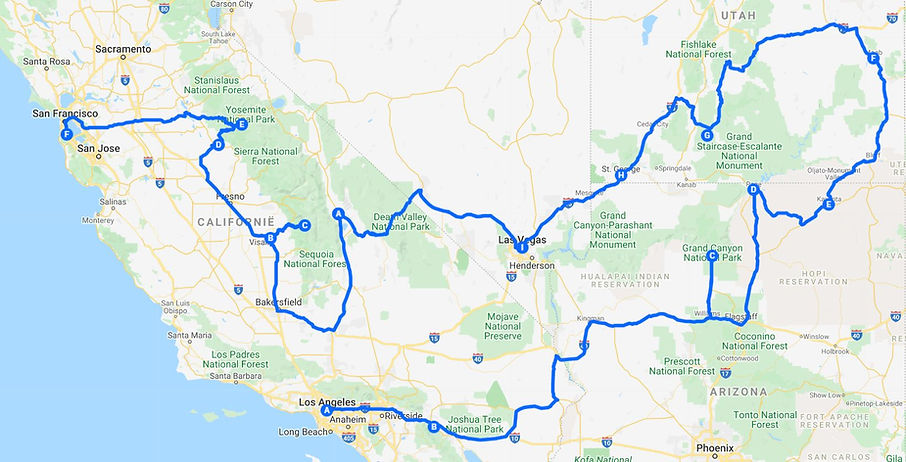
Road trip USA West Coast: brief itinerary
On this road trip in the USA on the west coast side we choose to see as much as we can. Not always the smartest move. If we ever do this again we take four weeks for this itinerary.
- Day 1: Flight from Dusseldorf to Los Angeles
- Day 2-3: LA
- Day 4: Palm Springs
- Day 5-7: Grand Canyon
- Day 8: Antelope Canyon
- Day 9: Monument Valley
- Day 10: Arches National Park
- Day 11-12: Bryce National Park
- Day 13: Las Vegas
- Day 14: Death Valley
- Day 15-16: Sequoia National Park / Kings Canyon
- Day 17-18: Yosemite
- Day 19 -> 22: San Francisco
- Day 23: Flight back to Dusseldorf
3 weeks road trip USA with kids
We did a three weeks road trip in the USA with our kids. But this area is so divers and indescribably beautiful, you can spend months here without getting bored! So this trip began with making many choices. Which national parks did we definitely want to visit? Should we rent an RV or should we just rent a car and stay in hotels? Would we focus on cities or go mainly into nature? The camper versus car choice was made according to budget. Renting a car and staying in hotel/motel accommodations was much cheaper. Driving a car is still faster and more comfortable. You can find out in this article which other choices we made!
If you don’t feel comfortable to make this trip on your own you can join a group. Organizations like Djoser or Sawadee offer a trip for families that is quite similar to the one we did.
→ Road Trips with Kids: tips and inspirationDay 1: Flight from Düsseldorf to Los Angeles
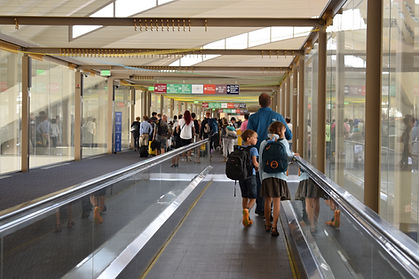
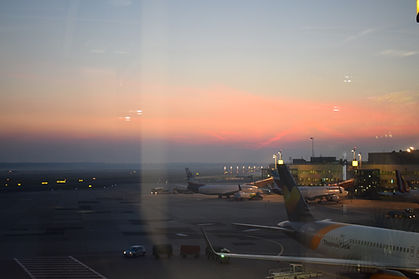
Flight from Düsseldorf to Amsterdam and from Amsterdam to Los Angeles international airport. By doing this crazy extra flight from Düsseldorf to Amsterdam we payed only half the price for our ticket! A good start of our trip! Do you want to find deals like this one? Check this page for travel tips!

Day 2-3: Los Angeles, adjusting to the USA time zone before starting our west coast road trip
Finally: Los Angeles international airport! Welcome jet lag! We have some doubts about how many days we should spend in Los Angeles. The city is huge, and has a lot of interesting spots to visit. But we decide to take it slow and stay here for two days. This will allow us to adapt to the American vibe. It will also help us adjust to the different time zone.
We stay at the Crowne Plaza Los Angeles Airport, a good location to start our journey and pick up our rental car (Alamo Rent a Car, this was easy, we can choose a car from a hundred or more cars, get in and leave!)
Universal Studios Hollywood
The city of Los Angeles doesn’t quite win our hearts. However, we manage to find some fun activities. These are especially enjoyable for families. A perfect choice when traveling with children is Universal Studios Hollywood. Although it’s a bit over budget, it guarantees a day full of excitement. The film studios themselves are definitely worth a visit, offering a fascinating glimpse into the world of movie-making. As for the theme park, it’s all about going with the flow and having a great time! The whole setting reminds me a bit of Phantasialand, with all the details and magical setting. Even with a full day, it’s nearly impossible to see everything this place has to offer.
For Lore, who is absolutely enchanted by Harry Potter, the sets and attractions in the Wizarding World are pure magic. She is captivated by the immersive experience, from the rides to the meticulously recreated scenes from the books. Of course, the magic extends to the shops, which draw her in with all their themed merchandise.

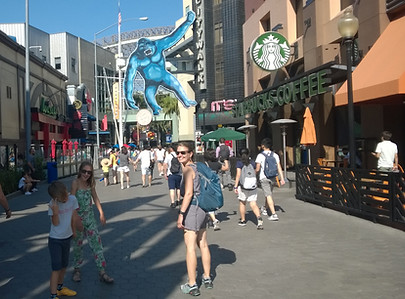

Universal Studios ticket price (park and movie tour): adults (10+): $159 / kids (3-9): $153
Highlights of LA
Driving around Los Angeles often leads to navigating through traffic jams, which can be frustrating for many visitors. A drive through Beverly Hills turned out to be somewhat disappointing; it lacked the charm and excitement we expected. The Hollywood Walk of Fame seemed much more appealing in the movies. In real life, the stars on the pavement were often overshadowed by the bustling streets and crowds. Nonetheless, we are grateful to have experienced these iconic locations.
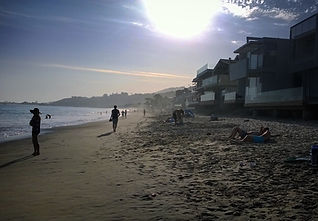
In contrast, the beaches truly exceeded our expectations. The famous Santa Monica Pier provides a perfect blend of relaxation and entertainment. Malibu, Venice Beach, and Long Beach also added to this blend. We enjoyed a delightful day filled with sunshine. The children played in the water while we soaked in the stunning coastal scenery. It was reminiscent of the perfect Baywatch lifestyle!
In Malibu, we managed to find our way onto a private beach. The security staff kindly turned a blind eye to our presence. One of the highlights of our trip was discovering how easy it is to strike up conversations with Americans. Everyone we met was incredibly friendly and social, a notable contrast to the more reserved demeanor often found among Belgians.
This warmth and openness created a welcoming atmosphere, making our exploration of the city and its surroundings even more enjoyable. We grabbed bites to eat at a local café. We also engaged in casual chats with beachgoers. These interactions added a special touch to our adventure in Los Angeles.

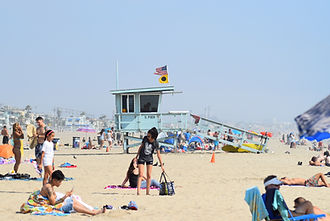
After three days in Los Angeles, we are fully acclimated to the American way of being. We have adjusted to the hour difference. Now we can start our road trip !!
Day 4: Palm Springs
Los Angeles to Palm Springs, a 200 km drive
Once you manage to get out of the traffic jams of Los Angeles it’s a relax ride! Palm Springs is a desert town. It is a place where the happy few have their private castle. The weather there is always sunny! In the center of Palm Springs are many cozy restaurants and a nice atmosphere, perfect place to spend some time!
We arrive around noon, at the Saguaro Hotel, in the center of Palm Springs. It is not a real family hotel. A few groups came here just to party. They became a little noisy after a couple too many drinks! But their swimming pool was the best!
It is around 48°C in Palms Springs so we take Palm Springs Aerial Tramway just outside Palm Springs. We hope it is less hot in the mountains!

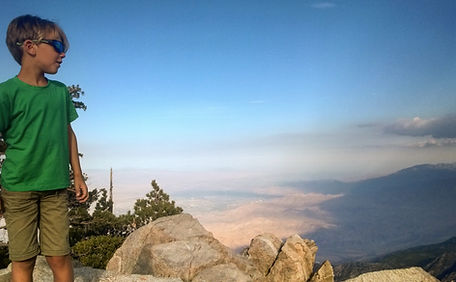

The Palm Springs Aerial Tramway is the largest rotating cable car in the world. It rises almost two kilometers. It offers a beautiful view of the whole area. The ride only takes 12 minutes, in this time you turn around twice, perfect for enjoying the surroundings! The ride is a bit expensive, but when you go up in the late afternoon you pay only half the price. On top of Mount San Jacinto it is a pleasant 25 ° C, perfect for a hike! We chose a short walk with beautiful views, the desert view trail.
Palm Springs Aerial Tramway ticket price: adults: $29.95 / kids: (3-10): $17.95
Day 5: Grand Canyon National Park, the absolute highlight of every USA west coast road trip
Today, we drive from Palm Springs further away from the USA west coast on this road trip. But the destination is iconic: Grand Canyon National Park, specifically to the Grand Canyon South Rim. It’s a 660 km journey, making it a long day in the car! However, visiting the Grand Canyon is definitely a bucket-list experience for us, and we are looking forward to it! Along the way, we pass through Kingman, known as “the Heart of Route 66.” This charming town still retains many original Route 66 elements. It offers a nostalgic stop for travelers exploring this historic highway.


We arrive at Grand Canyon Village just in time to witness a stunning sunset. The Grand Canyon truly captured our hearts at first sight. We had heard countless stories about this mythical place, but the reality far exceeded our expectations. The canyon walls display vibrant colors as the sun sets. This creates an otherworldly experience. We are left in awe of nature’s beauty. As we stand at the edge, we take in the vastness of the landscape. We feel a deep sense of gratitude that we are able to witness such a breathtaking sight.
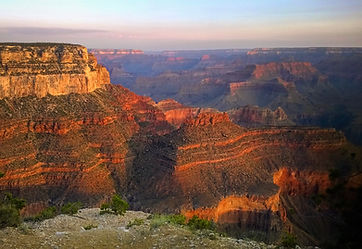

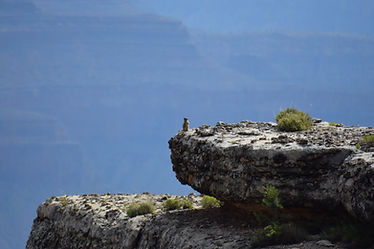
We stay here at Grand Canyon the Yavapai lodge west, the perfect place! It is only a few 100 meters from the canyon. So next morning, we just step outside to witness an amazing sunrise. The most beautiful morning run I ever did!
Day 6: Hiking in Grand Canyon National Park
There are many trails in this area, so it’s hard to choose. The Bright Angel Trail leaves not far from our lodge, the Yavapai lodge. This trail offers several shaded sections, making it a more comfortable choice for hiking. Additionally, water is available at various points along the route, which makes it even more appealing for us. The elevation difference between the rim and the river at this point is a challenging 1,600 meters. We decide to hike only to the first rest point, which is already a brisk walk. However, we’re not allowed to go any further; a park ranger deems the trail too difficult for our children. Our kids disagree, eager to continue, but the ranger remains firm, so we turn back toward the rim.
In hindsight, this turns out to be a stroke of luck. Just as we reach the rim, a thunderstorm rolls into the Grand Canyon. It would have been terrifying to be caught in such severe weather while on the trail. We’re grateful for the ranger’s caution and our safe return.

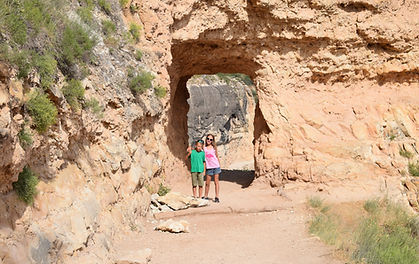
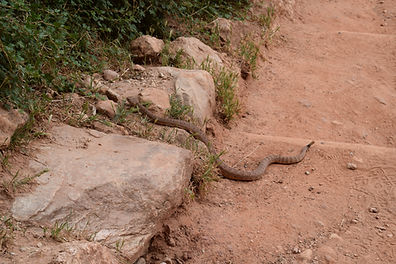
We also enjoyed the trail that runs from the visitor center along the canyon. It offers some beautiful viewpoints, including Hopi Point, Mohave Point, Pima Point, and Hermits Point. If walking isn’t your preference, you can take the free shuttle bus. The park provides this bus, and it stops at all the viewpoints. Staying in a lodge within the park is a great advantage. It allows you to explore this trail when most tourists have returned to their hotels.
Day 7: Grand Canyon National Park: Desert View Point and on the road to Page
In the morning, we visited Desert View Point on the east side of the park. It features a tower that offers a stunning view. But honestly, all Grand Canyon viewpoints are beautiful, so it’s hard to choose a favorite. Our advice: take your time at the Grand Canyon and try some extras, like a horseback ride or a helicopter flight. It’s a once-in-a-lifetime experience, so go all in!

In the afternoon we drive to Page, 220 km along the foothills of the Grand Canyon. We make a few stops, this landscape was too stunning to just pass by!
Just before you enter Page, you’ll pass by Horseshoe Bend. It’s easy to find. There are many cars and buses at the parking lot near the road. Clearly, this place has a lot to offer! Horseshoe Bend is a meander of the Colorado River with a horseshoe shape. The walk from the parking area to the viewpoint is about a kilometer. During the summer months, it gets extremely hot, and there’s no shade along the path. We were especially amazed by how close some people got to the edge for that perfect photo or selfie! There’s no entrance fee, only a small fee for the parking lot, so there’s no reason not to stop!
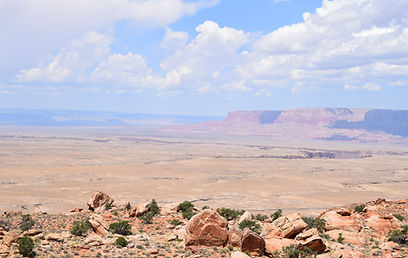
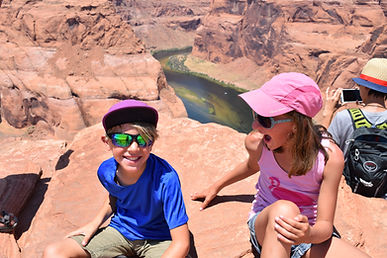

In the evening we arrived at Page, a small inconspicuous town. We stayed in the Page Boy Motel, very basic, neat with swimming pool. That is always a hit for the children when the temperatures are around 40 °C!
Day 8: Page and the mythical Antelope Canyon
When you visit Page, it’s usually with one main goal: to explore Antelope Canyon. Even if the name does not sound familiar, you have almost certainly seen the photos. They are used everywhere from travel books to Microsoft’s default screensaver. Antelope Canyon is split into two sections: Upper Antelope Canyon and Lower Antelope Canyon. We choose the Lower Antelope Canyon because it does not require a guide for the entire tour. A guide accompanies you nevertheless to the entrance and follows you through the hike. They often take over your camera to snap some cozy family photos. The guide kindly accepts a small tip at the end 😊.
The canyon is about 400 meters long and delightfully cool inside. A sudden storm caused a flash flood in 1997. After the incident, several safety measures were implemented. These include stepladders that allow you to exit at various points if necessary. The entire canyon is a photographer’s dream, with stunning photo opportunities around every corner. The visit lasts about an hour, and it’s all about fun and capturing memories! The number of visitors is limited, so it never feels crowded, and you’ll always have plenty of space to explore.
Unfortunately you have to book your visit in advance now for Lower Antelope canyon too. Here you find all information.
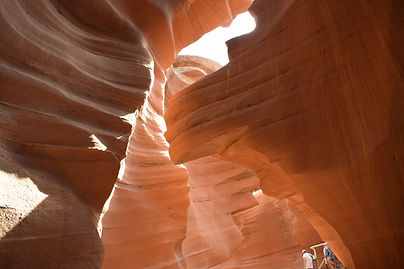
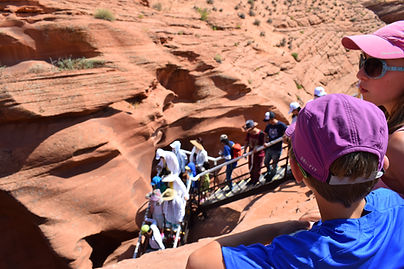
In the afternoon we drive to Kayenta to our next hotel, the Wetherill Inn, a 160 km drive
Day 9: Monument Valley
Monument Valley is probably the most photographed desert landscape in America, famous for its signature red color. The unique rock formations, rising from a vast plain, have served as the backdrop for countless films. The park spans parts of Arizona, with its northern section extending into Utah.
Millions of years ago, this area was home to many more rock formations. Most of these were made of softer rock that has since eroded, leaving behind the harder formations we see today. These remaining formations are called ‘mesas,’ known for their wide bases and flat tops. As erosion continues, these mesas are gradually worn down even further.
Monument Valley is located on land managed by the Navajo Nation, for whom tourism is a key source of income. The visitor center offers a breathtaking view of the entire park and is definitely worth a visit. You can join an organized tour or explore the park in your own car. The roads are unpaved. However, we had no trouble navigating them with our rental car. Having your own vehicle allows for a bit more freedom to explore!

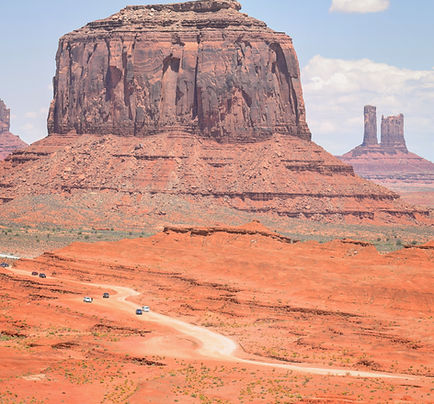

In the late afternoon we drive to Moab, a 270 km drive. This is the eastern most point of the USA we reach on this road trip at the west coast side. Along the way we find some nice places. One such place is the Mexican Hat Rock, which is a nice picnic spot where hardly anyone stops!
We staye in the River Canyon Lodge, a great hotel and great location to explore Canyonlands National Park and Arches National Park!
Day 10: Arches National Park
Arches National Park is located in the southeastern part of Utah. It has a single entrance on its southern side. This entrance is about 6 miles from the town of Moab. The park is renowned for its striking stone arches. It also features towering spires and other unique natural formations. These seem to change color depending on the position of the sun. The park’s name comes from its high concentration of natural rock arches. It contains over 2,000 arches in total! While there is a paved road through the park, you’ll often need to hike to reach the arches.
Visiting the park
The main road in Arches National Park stretches 29 kilometers, with two short side roads along the way. You can easily explore the park in your own car. The visitor center is located right at the entrance, and about 1.5 kilometers in, you’ll reach the first viewpoint, offering a stunning panorama of the town of Moab and the Moab Canyon.
The trails
The first trail we tackled was the Park Avenue Trail. We choose it for its impressive towering rock walls on both sides. The hike leads to a large monolith known as the Courthouse Towers before looping back to the starting point. It is extremely hot this day. We adjust our plan. Bart drops off Ruben and me at the Courthouse Towers. We walk back to the starting point, where Bart and Lore meet us. From there, they walk to the Courthouse Towers, and we pick them up by car.
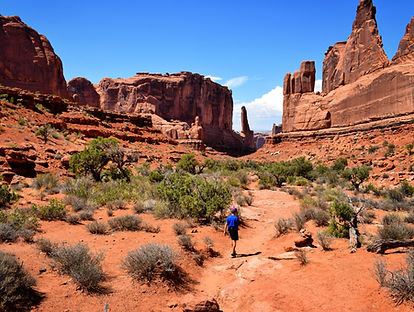

Other trails we found worth doing:
Balanced Rock: a walk of half a kilometer. This rock that balances on a pedestal is very impressive. It has a weight of 3,000,000 kg and the total height is 39 meters. You can also see this rock from the road, but the closer to it the more impressive it gets!
Windows Section: This is an important concentration of arches and other shapes. They have names like Double Arch, Cove Arch, North Window and South Window. You can see the arches up close and even walk underneath, the trail is about 1.6 km
Delicate Arch: the park’s most famous arch and also the symbol of the state of Utah. This arch is, among other things, on car license plates. From the parking place at Wolfe Ranch, a 2.4km walking path leads to the arch. The way there is a lot of climbing and when we were there the temperature was around 40 °C, so this was tough! But the arch itself makes it all worthwhile!

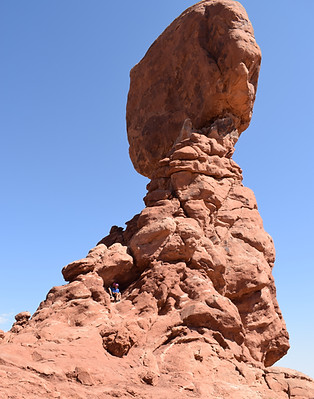
We have no choice but to skip the Canyonlands National Park, we just don’t have time enough! We’ll save that one for next time!
Day 11: On the road again: from Moab to Bryce Canyon National Park
A long drive from Moab to Bryce Canyon, covering 428 kilometers and passing by Capitol Reef National Park. We take the Scenic Byway 12, which offers stunning views at every turn. After 10 days of traveling through California, Arizona, and Utah, we’ve come to expect nothing less than breathtaking scenery!
We arrive at Bryce View Lodge in the evening. The kids jump into the swimming pool after sitting a long day in the car!
We were not sure what to expect from Bryce Canyon. Technically, it’s not a canyon. It is a series of naturally formed amphitheaters. These are filled with countless irregularly shaped rock formations in a variety of shades. We have never seen anything like it—it’s like stepping into a fairy tale!
The park has only one entrance on the north side, with a single road running from north to south. The distance from the entrance to the southernmost point is just 18 miles. There are a few short side roads that lead to various viewpoints. We first stop at the Bryce Canyon National Park visitor center. Then we head to watch the sunset at Sunset Point. Unfortunately, it is cloudy, but even without the interplay of light and shadow, the park’s beauty is undeniable! Bart decides to run back to the hotel while we take the car and spot several deer along the way.
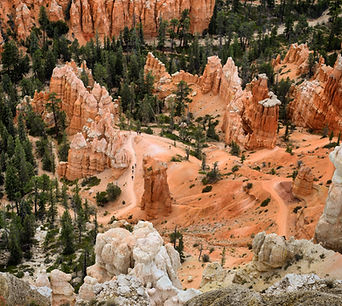
Day 12: Bryce Canyon National Park hikes
The next day we have more luck, the sun is shining, it is not to hot, so perfect weather for a hike!
We start at Sunset Point, there are a number of trails who start here, you can pick one or just go with the flow! We do the Navaja Loop Trail. The Navajo Loop Trail is often considered the most popular trail in Bryce Canyon National Park for a reason. The impressive viewpoints from this trail expose you to a landscape unlike any other you’ve ever seen.

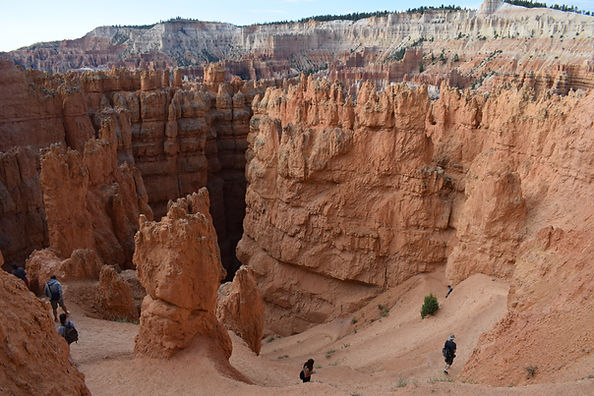

Some tips when you visit Bryce Canyon
– All viewpoints are on the same side of the road. It is therefore more convenient if you first drive all the way to the end of the park, and only stop at the viewpoints on the way back, you can always park on the right side of the road
– The most beautiful part of Bryce Canyon is at the very front (the Bryce Amphitheater), if you are short on time you should only visit this part
– Trailers are only allowed to enter the park when using the campground, and may also go no further than Sunset Campground
– The viewpoints are beautiful, but we think the best way to experience the park is to descent into the Canyon itself
Zion National Park
In the afternoon we drive to Saint George passing Zion National Park. So we have just the afternoon in this National Park.
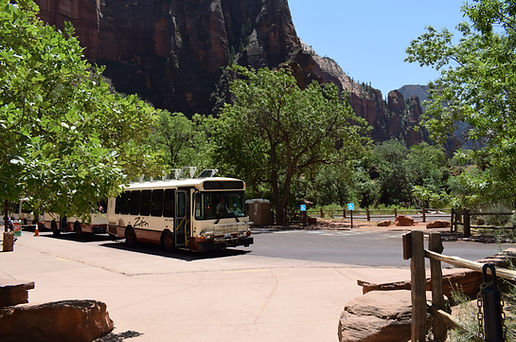
You can’t drive your own car through Zion National Park due to the crowds. Instead, you have to use the free shuttle buses. Despite all the ‘too crowded’ warnings we read beforehand, we actually found the crowds to be manageable. You can park your car at the Visitor Center just past the south entrance. If it’s full, you can park in the town of Springdale. We had no trouble finding a spot, although Zion can be quite crowded. The shuttle stops at eight locations throughout the park. You can hop on and off as often as you like. It’s easy. Just pick a trail and ride the bus to it. Don’t forget to enjoy the views along the way!
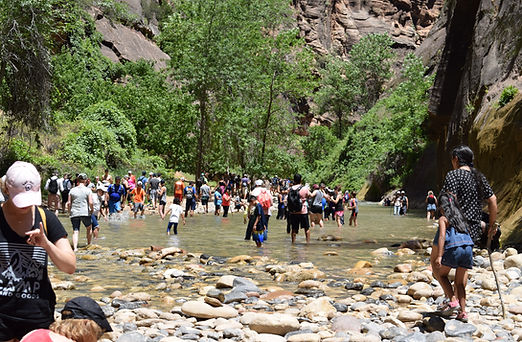
We choose the last stop, the Temple of Sinawava. Several fantastic hikes start here. We opt for the Riverside Walk. You can walk through the gorge. Wading into the river is refreshing in the heat. Unfortunately, we had the same idea as many others. This was by far the busiest trail we encountered on our entire trip to America. But the natural beauty is absolutely breathtaking!
We arrive in Saint George late in the evening, and stay in Best Western Plus Abbey Inn. If you search for good hotels on your USA road trip on the west coast side the Best Western hotels are a good option!
Day 13: Las Vegas Nevada
We drive from Saint George to Las Vegas, 198 km
What to say about Las Vegas … it’s busy, it’s hot, and you must have seen it!
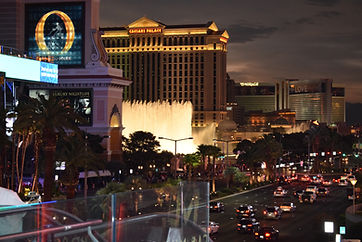
Hotels in Las Vegas aren’t expensive. It’s not the place to stay in a motel. Go all out and book a classy Las Vegas hotel! We stayed at the Tropicana, which was perfect for the kids with its multiple pools. Unfortunately this iconic hotel closed not long ago. But honestly, every hotel in Las Vegas has something unique to offer, so it’s hard to go wrong. In the evening, a walk along ‘The Las Vegas Strip‘ is a must: casinos, hotels, and more casinos. You can actually enter most of the hotels and enjoy the spectacle. Our kids’ favorites were ‘Excalibur,’ which looks like a medieval castle, and ‘New York-New York,’ with its spectacular rollercoaster.


Day 14: Death Valley National Park
Death Valley during summer
Glad we can leave noisy Las Vegas behind us and go back to California. Early in the morning we are already on our way to Death Valley National Park. A 379 km drive, passing mysterieus area 51.
Summer is not the best time to visit Death Valley. The extreme heat makes it nearly impossible to do much. We mostly stay in the comfort of our car. At the most interesting points we step out briefly and then quickly retreated to the cool air conditioning. Today, it’s 49°C. Despite the heat, the park offers more than just desert. It’s home to salt flats, rock formations, canyons, sand dunes, and mountains. The name ‘Death Valley’ dates back to 1849, during the California Gold Rush. Eager settlers tried to take a shortcut to California through this unforgiving desert. They chose this route instead of following established guides. Many lost their wagons, livestock, and belongings, arriving in California much later than expected. Some did not survive the journey, and thus the name ‘Death Valley‘ was born.
Dante’s View
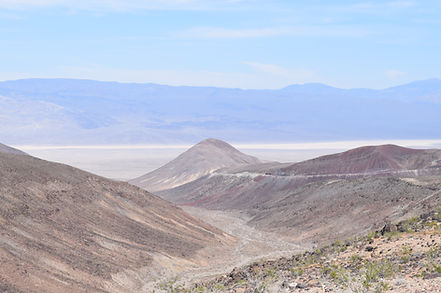
You will encounter a small unpaved side road when entering Death Valley from Las Vegas. This road is about 5 km before reaching the valley. This is Dante’s View Road. It leads to a viewpoint at an altitude of over 1,600 meters. The last part of the road is very steep. It has several hairpin turns. Vehicles longer than 7.62 meters can not access it. For us, Dante’s View is the most stunning viewpoint in the park. It offers a breathtaking panorama of the salt flats below. You can also see Badwater Basin far beneath you.
Zabriskie Point
Don’t miss Death Valley’s ‘Zabriskie Point,’ another viewpoint where the landscape transforms into mesmerizing shapes and colors. Other must-see spots include the impressive sand dunes at Stovepipe Wells. Furnace Creek has a visitor center. Devil’s Golf Course is a vast expanse of salt chunks and pillars up to 30 cm high. The evaporation of surface water creates these formations.


Badwater
Badwater is also worth a stop. It’s the lowest point in the US, sitting 86 meters below sea level. It’s not recommended to walk on the salt flats in hot weather. However, that does not seem to stop people when we were there. You’ll find small puddles of standing water, and it’s the smell from these pools that gave the area its name..
The exit of the park is a beautiful road into the mountains. There are hotels in Death Valley, but we stay the night in the Best Western Plus Fontier Motel in Lone Pine. A good choice, the temperature is much more comfortable!
Day 15: On the road to Sequoia National Park and Kings Canyon
We drive from Lone Pine to Exter, 322 km. Passing beautiful Lake Isabella. In the late afternoon we arrive at the Best Western Exeter Inn all ready to explore Sequoia National Park and Kings Canyon.
What was supposed to be a relaxing evening at the motel suddenly took an unexpected turn. After visiting Sequoia National Park, we planned to drive towards Yosemite and stay at a motel in Mariposa. The area was severely impacted by forest fires at the time. We received information that all of Mariposa had been evacuated. Several access roads to Yosemite National Park had also been closed. So, what to do next? After a few stressful moments, we decide to book a hotel in San Francisco instead and skip Yosemite altogether.
Day 16: Sequoia National Park and Kings Canyon
Impressive nature
Kings Canyon and Sequoia National Parks are two adjoining parks. They are managed as one. Both parks cover roughly the same area (1,700 km²) in California’s Sierra Nevada Mountains. This is where you’ll find the highest mountain in the continental US, Mount Whitney (4,416 m). You will also discover the famous giant sequoia trees—some of the largest and most magnificent trees in the world. The parks also feature breathtaking deep ravines.
Sequoia National Park is home to stunning granite peaks, deep gorges, lakes, and rivers. For outdoor enthusiasts, it’s a paradise, with over 800 miles of hiking trails weaving through the park’s forests. There’s no shortage of routes to explore, and you could easily spend days here. However, we do not have that much time, so we selected a few key spots to visit. We heard from some people before we left on this USA west coast road trip that they skip these parks. They do this because you can see some sequoia trees in Yosemite NP too.
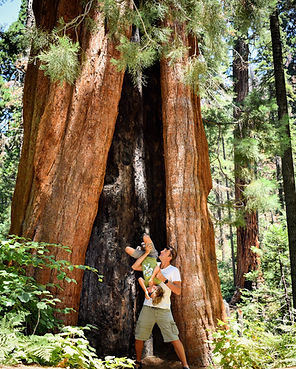


Highlights of the parks
Moro Rock: You climb 400 steps carved into the rock. A panoramic view over the park and its canyons is your reward. I discover here that I have a slight fear of heights. Near the top, the path becomes very narrow. There are steep drops on both sides!
General Sherman Tree is one of the park’s most famous attractions. It is the largest tree in the world by volume. It stands 83.8 meters tall, has a diameter of 11.1 meters, and is between 2,300 and 2,700 years old. It’s just a short walk from the parking area, but be warned—everyone who visits the park takes this walk! So, forget the idea of a peaceful forest stroll; it can get quite busy here.
There are several stunning viewpoints along the road in the northwest part of the park. Be sure to stop at the Kings Canyon Overlook for views of the gorge and the wilderness of the High Sierra. At Redwood Mountain Overlook, you’ll see the largest redwood forest in the world, the Redwood Mountain Grove. Further north in the park, Grizzly Falls (just before the parking entrance), Canyon View, and Roaring River Falls are also great stops.
And beyond that, it’s simply a matter of driving through the park and taking it all in. Short walks start all over the place, with redwoods constantly in sight. The narrower the road or the longer the walk, the quieter it becomes. If you opt for a slightly longer trail, you’ll often have the forest all to yourself!
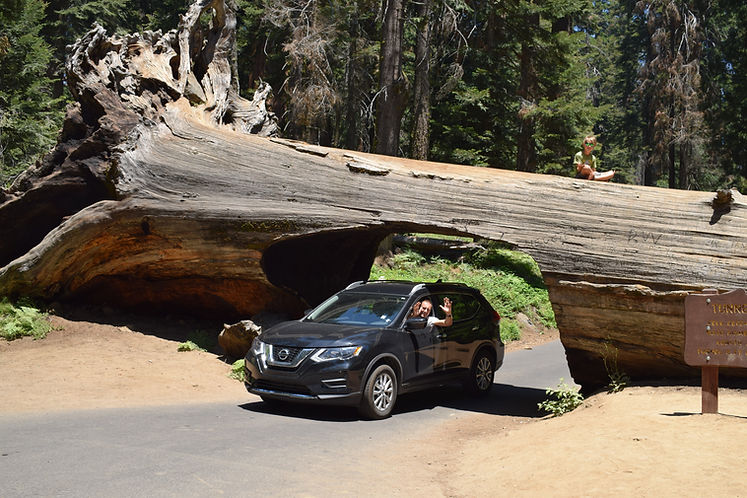
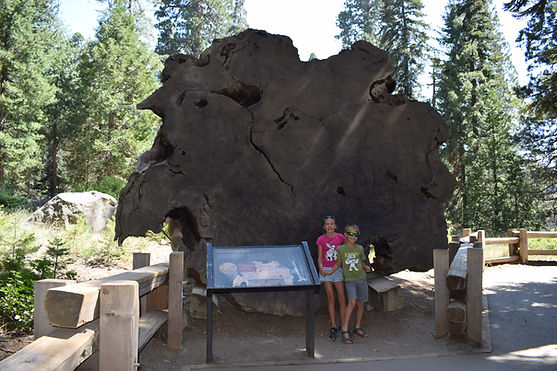
And meanwhile … we follow the situation with the wildfires in Yosemite closely. The motel in Mariposa confirms that they would certainly be closed to the public as they house the firefighters …
Day 17-18: Yosemite
Now we had to decide: should we drive straight to San Francisco, or was there still a chance we could go through Yosemite? After a few more calls, we receive confirmation that the access road via Fresno is open. So, change of plans: we’re heading to San Francisco via Yosemite! Even if we only have a few hours, this might be our only chance to ever visit this park.
Central Valley
We enter Yosemite National Park through the south entrance. Unfortunately, the Mariposa Grove is closed, as are all the campsites. The air is quite foggy, and we can feel the smoke as we breathed. As we approach Yosemite Valley, the smoke begins to clear. After the tunnel leading to the Valley, we are greeted by a breathtaking view of the entire valley. This view alone makes the detour more than worth it!
In summer, it can be so busy here that access to the valley is sometimes closed. But because of the recent forest fires, it is remarkably quiet and peaceful.
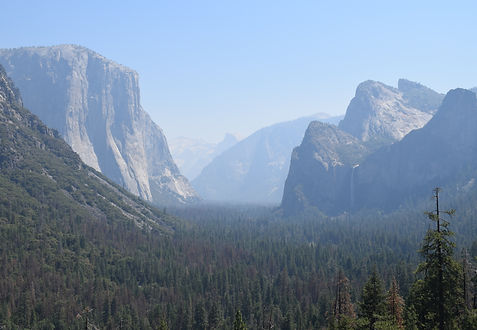

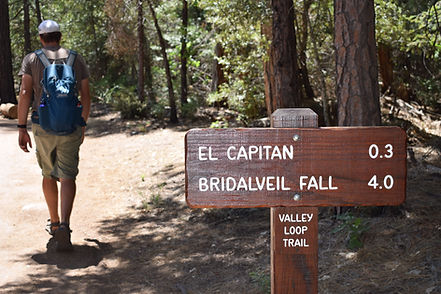
In the valley itself, you can use the free shuttle buses. There are two routes: the Yosemite Valley Shuttle and the El Capitan Shuttle. The buses run from 7 a.m. to 10 p.m.
Yosemite, a bit more information
A bit about the park itself: Yosemite National Park is a world-renowned natural wonder that attracts over 3.5 million visitors each year. Located in California’s Sierra Nevada mountain range, this stunning wilderness offers visitors breathtaking views. It provides outdoor recreation opportunities. The area also boasts a wealth of scenic attractions. Established as a national park in 1890, it has expanded over the years. It covers a current size of 3,080 km². The park has altitudes ranging from 600m to 3,400m. Since 1984, it’s been designated as a World Heritage Site. Yosemite is famous for its awe-inspiring landscapes. These include towering granite cliffs, cascading waterfalls, and lush forests. All are accessible via miles of hiking trails. Yosemite Valley’s El Capitan and Half Dome are among its most iconic features. They draw rock climbers and hikers from around the world.
The park has three entrances on its western side, one to the south, and one to the east. Summers bring pleasant temperatures, but in other seasons, some roads may be closed.
More than one day?
We park near Yosemite Valley Lodge. Just seeing the lodge makes an overnight stay here seem incredibly appealing, so I head to the reception desk. To my surprise, they tell me, ‘Of course, we still have rooms available. Many tourists canceled because of the forest fires.’ It sounds too good to be true, but I book immediately! Now we feel more relaxed and can take our time deciding which trail we want to tackle next.
Visiting the highlights
We visit Yosemite Village and the Visitor Center. You can take short walks through the valley. These walks pass Yosemite Falls, which is the highest waterfall in North America. Here, the water plunges 739 meters into the valley in three stages, creating a spectacular sight.
Unfortunately, we don’t make it to Glacier Point because our time is limited. If you have more time, don’t skip it!
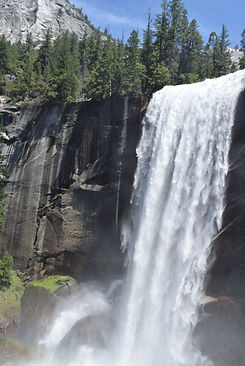
In the afternoon, we hike the Mist Trail. We take the bus to the starting point. Why this trail? It’s Yosemite’s signature hike. While many trails in the park are popular for leading to a single spectacular destination, the Mist Trail offers incredible views all along the way. It begins with the bridge overlook. The hike then progresses to two unforgettable waterfalls. These waterfalls drop a combined total of over 900 feet (270 meters).
It quickly becomes clear why it’s called the Mist Trail. As we approach the first waterfall, we walk so close that we’re continuously bathed in mist. By the time we reach the top, we’re completely soaked!
But this hike is such a good experience! When you take a look to other of our travel itineraries, like Jordan or Austria, you will see that hiking with our kids is one of our favorite activities.
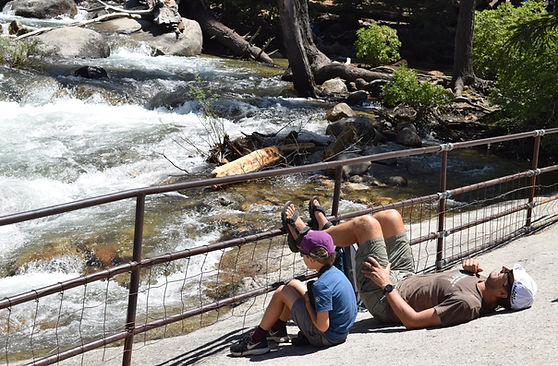
Day 19-20-21-22: San Francisco, back to the west coast on this USA road trip!
Time to head to San Francisco! A 269 km drive. This great flower power city is also our last stop of this USA road trip, and we are at the west coast again. We’ll stay for three nights at the Holiday Inn San Francisco – Civic Center. San Francisco is an expensive city to stay in, so Airbnb might be a better option here.
San Francisco is located on a headland that separates the Pacific Ocean from San Francisco Bay. The city is famously built on 43 hills, which give it a unique character. It’s a beautiful place, with charming Victorian houses, stunning parks, large museums, and a vibrant cultural scene. The city’s atmosphere alone makes a visit worthwhile, and we’re quickly convinced of its charm!
How to get around?
To start, it’s recommended to explore the city by car. One great method is to follow the 49-Mile Scenic Drive. This route is well-marked with blue-and-white signs featuring a seagull. The route begins at Fisherman’s Wharf in the northeastern part of the city.
Here, for the first time, we have to pull on our sweaters. It’s still a comfortable 20°C. However, it is much cooler than the temperatures we’ve gotten used to! We purchase a public transport pass. This makes it easy to get around the city. It also allows us to ride the famous cable cars. Tip: hop on at an intermediate stop rather than an endpoint to avoid waiting in long lines!

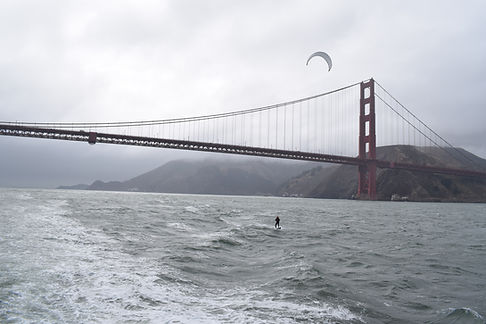
Golden Gate Bridge
The Golden Gate Bridge is a suspension bridge. It spans the Golden Gate Strait. The bridge connects the San Francisco Peninsula to the land north of the city. Massive cables hold up the bridge, each about 1 meter in diameter. Its name is linked to the gold rush era, when gold seekers arrived in the nearby harbor. There are several viewpoints for capturing stunning photos of the bridge. We opt for a boat trip. This choice allowed us to sail beneath it. The boat also passes the legendary island of Alcatraz. If you want to visit this island you have to book tickets months in advance at www.alcatrazcruises.com. We hadn’t done that, so unfortunately, we missed out!
Fisherman’s Wharf
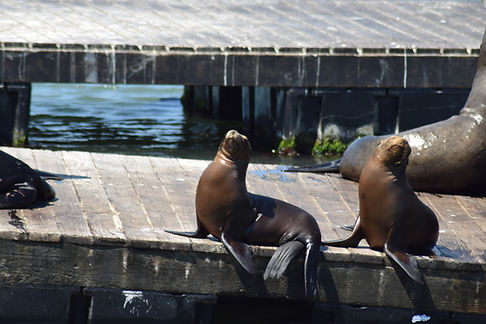
Every night, we stayed in the Fisherman’s Wharf area. With plenty of great restaurants and cozy cafes, it was hard to choose, so we tried different ones each night. This district is a hub for two of the three remaining cable car routes. It offers beautiful views of San Francisco Bay, the Golden Gate Bridge, and the city skyline. There’s so much to do on Pier 39—an absolute favorite for the kids! You can watch sea lions lounging on platforms, enjoy street performers, explore attractions, and visit various shops and restaurants. The atmosphere is fantastic!
Some other must-visit places:
Painted Ladies: These iconic Victorian houses are painted in three or more colors and are sure to make you smile!”
Chinatown: The largest Chinese community outside of New York, marked by an impressive entry gate. We were especially taken by how clean and inviting it was here! This part of the city has been the backdrop for many films.
Golden Gate Park: A sprawling 4.1 km² park and one of the most visited in the U.S. It’s home to a large natural science museum and a botanical garden.
Lombard Street: Known as the most winding street in the world. It’s a popular spot for tourists to drive through, so expect some company!
Day 23: Time to go back home… the end of a fantastic three weeks road trip on the USA west coast
Sadly, San Francisco marks the end of our incredible trip. Returning our rental car at the airport was just as easy as picking it up in Los Angeles. But there was one last pleasant surprise: flying home for the first time on an Airbus A380!

tips for a road trip to the west coast of the USA (read all the tips in this article):
- Take a National Park annual pass if you are planning to visit 3 or more parks. It saves you a lot of money! You can use it at every park except Monument Valley.
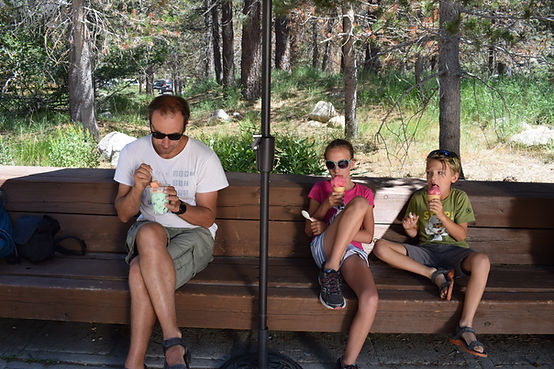
- Like ice cream? Take one at the vistorscenter of the national parks, the scoops are huge!
- Take more time than we did, maybe three months instead of three weeks will give you enough time
- Don’t forget to activate your credit card if you come from Europe!
FAQ – Road trip Los Angeles to San Francisco
Most travelers take 10 to 21 days for this route, depending on how many national parks you want to visit. In two weeks, you can comfortably drive via Joshua Tree, the Grand Canyon, Las Vegas, Yosemite, and the Pacific Coast Highway without feeling rushed.
The best months are May through October. Spring and fall offer pleasant temperatures, accessible national parks, and fewer crowds compared to July and August. Avoid winter if you plan to visit Yosemite or the Sierra Nevada, as some mountain passes close due to snow.
Top highlights include Joshua Tree, Grand Canyon, Zion, Bryce Canyon, Death Valley, and Yosemite National Park. Each park has its own unique scenery — from desert landscapes to granite cliffs and waterfalls.
Expect to spend around €120–€180 (or $130–$195) per person per day, including car rental, accommodation, gas, and meals. For a three-week trip, that’s roughly €2,500–€4,000 ($2,700–$4,300) per person, depending on your travel style.
A car with motel stays offers more comfort and flexibility if you like variety. An RV (campervan) gives you more freedom, especially for families or travelers who enjoy being surrounded by nature. Both options have pros and cons — it mainly depends on your budget and travel preferences.
Yes, for some parks like Yosemite and Zion, it’s essential to reserve your entry or accommodation well in advance, especially during summer. Campgrounds and lodges in popular parks fill up quickly.
Related articles:
💡 Travel Tips & Useful Links
- Find the best deals for flights: Skyscanner
- Compare and book accommodations worldwide: Booking.com
- Find the cheapest rental cars: Rentalcars.com
- Book experiences and attractions easily: GetYourGuide


[…] are no direct flights from Europe. Fortunately, my ESTA was still valid from a previous trip to the USA (it’s valid for two years!), and my passport was up to date. With all the paperwork in order, […]
I intended to put you the tiny word to be able to give many thanks once again on the lovely methods you’ve contributed at this time. This is quite wonderfully generous of people like you to provide easily all that a number of people could possibly have sold as an e-book in order to make some cash on their own, notably considering that you might well have done it if you desired. Those basics as well served to provide a fantastic way to be aware that the rest have similar keenness similar to my very own to know the truth good deal more with regard to this condition. I am sure there are a lot more pleasurable moments up front for folks who discover your website.