

 admin
adminOne of the main concerns parents have when planning a trip with their kids is: how do we deal with jet lag and avoid we keep struggling? Of course, you want your kids to feel their best while traveling. As an adult, you can sense when you’re tired and need rest, but children—especially younger ones—often struggle to express how they feel. Should you keep them awake during a long flight, or let them adjust to a new time zone at their own pace? Discover the best tips for tackling jet lag in this article!


What is jet lag?
Jet lag is a temporary sleep-wake disorder caused by crossing multiple time zones in a short period, such as during a long-haul flight. Your internal clock, which regulates sleep-wake cycles, hormone production, and other bodily processes, becomes misaligned with the local time at your destination.
To put it into perspective: when we switch between daylight saving time and standard time, many people need a few days to adjust. Now imagine what happens to your body when you suddenly find yourself six time zones east or west!
Common symptoms of jet lag include daytime fatigue, difficulty sleeping at night, headaches, nausea, and trouble concentrating. Some people also experience digestive issues or changes in appetite.
The good news? Traveling does not automatically mean you’ll experience jet lag! Some people seem immune to it, while others feel completely out of sync for the first week of their trip. Jet lag is also only a concern when traveling east or west. Destinations like Namibia or South Africa won’t cause any jet lag at all for Europeans!


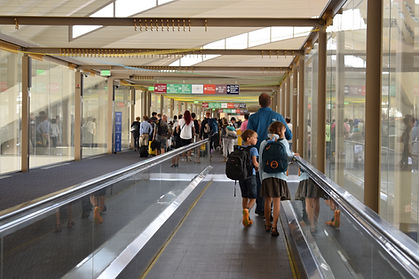
Are kids immuun for a jet lag?
Unfortunately, jet lag can also be quite challenging for children. However, keep in mind that children are often more adaptable than adults. They tend to adjust more quickly to new situations. While this isn’t true for every child, it’s certainly no reason to skip your travel plans.
Just as it’s helpful to understand how you personally react to time zone changes, it’s equally useful to learn how your children respond. With this knowledge, you can take a few simple steps to prevent a lot of discomfort for everyone!

Here are a few tips to help prevent jet lag for your kids—or at least make it more manageable
Choose your flight times wisely
If possible, choose a flight that arrives in the evening. After a tiring and often long travel day, you can head straight to bed. A good night’s sleep will help the whole family adjust to the local rhythm from day one. This is especially true for flights heading to the Americas if you’re European.
Flying east to Asia from Europe, however, can be more challenging. You’ll typically start with an overnight flight, get little sleep on the plane, and then arrive exhausted at your destination around midday—leaving you to fight off sleep for the rest of the day.
On the bright side, children often sleep better on planes than adults, which can make it easier for them to adapt.
Traveling east generally increases the likelihood of jet lag compared to traveling west. This is because our biological clocks find it harder to adjust to shorter days than to longer ones.
Children are flexible, but their internal clocks need a little help. Patience, a well-planned schedule, and plenty of cuddles are the best remedies for helping kids overcome a jet lag.
Prevention is better than cure
Adjust bedtimes during the week before departure. Gradually shift your children’s bedtimes a bit earlier or later, depending on your destination. That extra hour or two might not seem like much, but you’ll definitely notice the difference at the start of your trip. This small adjustment can help ease the transition to the new time zone.
Leaving well-rested is half the solution
Start your trip well-rested. Your resilience is much greater when you’re well-rested, making it easier to deal with jet lag. Not only will it help you manage the adjustment, but if your children have difficulty with the new time zone, you’ll be better equipped to handle it—and your trip won’t start with a full-blown family meltdown!
Water, Water, Water
Stay hydrated during your flight (no alcohol or caffeinated drinks!). The air in an airplane is very dry, which can worsen jet lag symptoms for you and your kids. Drink plenty of water and make sure your children do the same. People often drink too little because they want to avoid using the airplane bathrooms, but this is not a good idea. Taking short walks around the plane will also help you feel more energized when you arrive at your destination!
Screen time
Limit screen time! The blue light from tablets and phones can disrupt the biological clock. Opt for relaxing activities like reading or drawing. Bring along a favorite blanket or stuffed animal for younger children to make it easier for them to sleep. Good to know: blankets and pillows don’t count as carry-on luggage, so you can bring them free of charge!
Convincing your body to adjust to the new time zone
Here are few tricks that help you to adapt to your destination’s time zone as soon as possible. Eat when it’s mealtime and sleep when it’s bedtime—even if the whole family is wide awake! Avoid sleeping during the day, or limit it to a short power nap. Staying up all night won’t help either. On our first nights in Thailand, we went swimming with our kids around 2 AM. The first few hours they slept well, and after swimming, everyone went straight back to sleep. The kids still talk about that late-night swim years later!
Don’t make it harder than it needs to be
This might be the best tip: don’t over-schedule the first few days. Allow everyone time to adjust. Look for fun, outside, low-energy activities. Starting a road trip on day one is definitely not recommended! During our road trip through Canada, we spent a few days in Toronto, in the US we did the same in Los Angeles. In Thailand, we planned an extra day in Bangkok. This also has an additional benefit. When your luggage hasn’t arrived at your destination—something that happens to us often—it will be delivered to your hotel the next day.
Medication?
Lastly, many people turn to medication to counter jet lag. This is almost always completely unnecessary! If you have concerns or believe medication may be needed, discuss it with your doctor.

-> Conclusion: Sometimes, jet lag is simply part of the travel experience, both for you and your children. Don’t stress about it, but try to apply the tips as much as possible. After a few days, the fatigue will fade, and you’ll be able to fully enjoy the fantastic adventure with your kids!


