
 admin
adminEstimated reading time: 6 minutes
Volunteering in Namibia had been on my wishlist for a long time. I wanted more than just travel. I wanted meaningful work, preferably abroad, where I could contribute to wildlife conservation. All of this came together when I spent a week volunteering in Namibia as part of a longer road trip.
Namibia offers inspiring opportunities for conservation volunteers. Programmes like the Na’anku sê Wildlife Sanctuary host up to 60 volunteers at a time. At wildlife rescue centres such as this one near Windhoek, volunteers work at once on daily tasks. The Sanctuary counts on volunteers for caring for injured or orphaned animals, helping with habitat restoration, and supporting ecological research.
Through volunteering, I felt deeply connected to this land: working alongside conservationists, contributing to nature, and learning from the local community. I finally didn’t feel like a tourist, but as a part of this amazing country
Na’an ku sê, wildlife sanctuary
The project
I extend my stay in the Windhoek region for an another week. This plan is more of a childhood dream I wanted to fulfill: volunteering at a wildlife sanctuary. Volunteering opportunities for tourists are available almost anywhere in the world, and not all projects live up to their claims. However, I have full confidence in this particular project: Na’an ku sê.
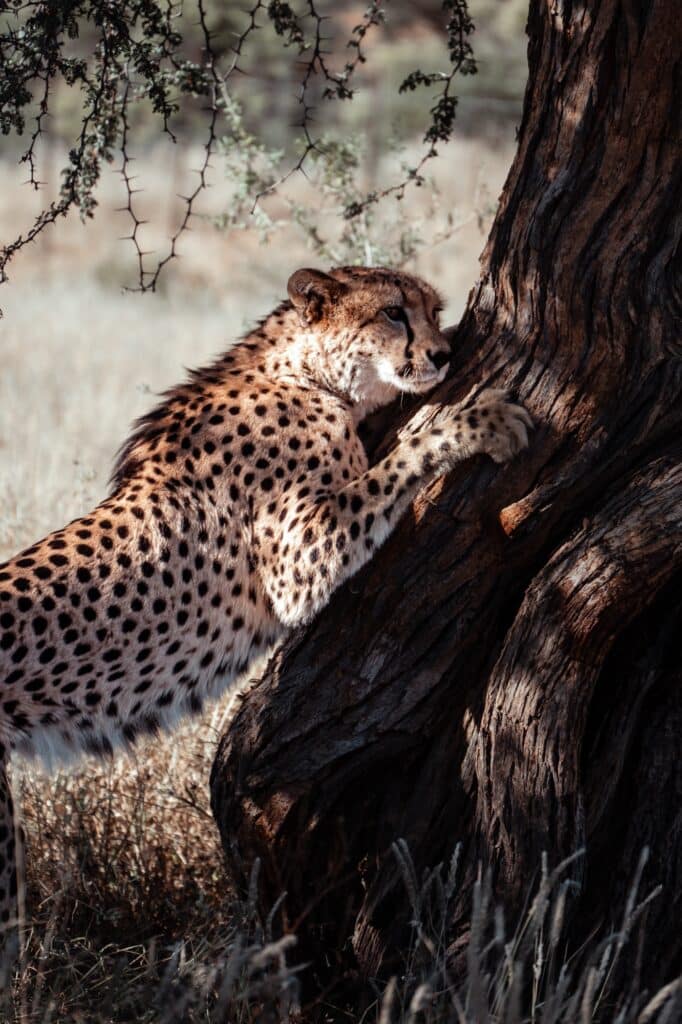
Na’an Ku Sé is established as a sanctuary for wildlife. It provides a safe haven for animals kept as pets, those displaced due to conflicts with farmers, such as cheetahs hunting livestock or those threatened by poachers. The ultimate goal is always to release the animals back into the wild, though unfortunately, this isn’t always possible. Founders Rudie and Marlice Van Vuuren are dedicated to save the life of every single animal.
“Our vision is an Africa where humans and wildlife can live & thrive together”
Over the years, the Na’an Ku Sé Foundation has grown into an organization with approximately 500 staff members. They rely heavily on volunteers to sustain its operations. One project has grown into a few dozen of different projects: conservation, humanitarian en ecotourism projects. What struck me most was the authenticity of the organization. There’s no polished machine or fluffy marketing, just passionate employees who have given a piece of their heart to this heartfelt project.
My experiences
Life of a volunteer
As a volunteer, I have no idea what to expect upon arrival. Would I spend the entire week cleaning cages? It was entirely possible…
It was clear that this organization has extensive experience with volunteer work. The program was well-balanced. A bi-weekly rotating schedule ensured that anyone staying for two weeks experienced different activities in each shift. The day was split into a morning shift from 8:00 AM to 1:00 PM and an afternoon shift from 2:30 PM to 5:30 PM.
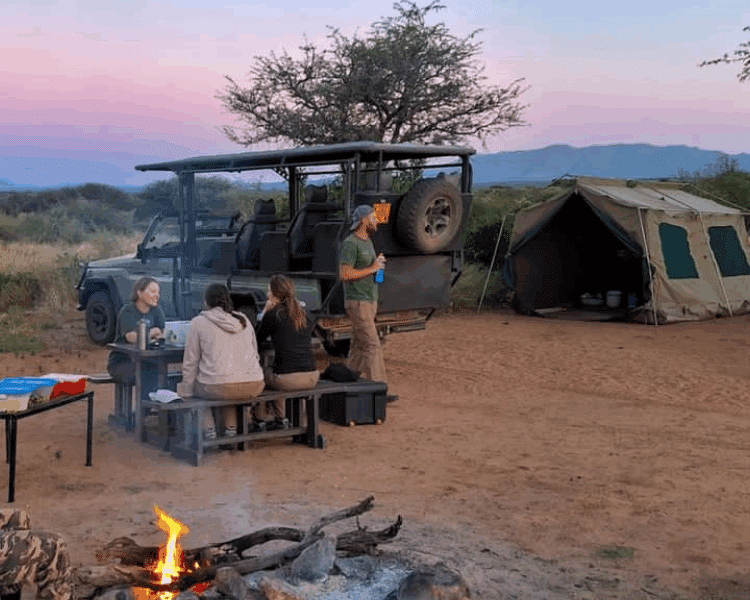
Since I only stayed a week, each shift was a new discovery. We slept in glamping tents with comfortable beds and outdoor bathrooms. Everything I did that week was so far removed from my daily routine and even from my usual adventurous travel experiences.

Memories for life
I’ll never forget those warm morning showers under a stunning sunrise after a chilly night, the cozy (often Wi-Fi-free) evenings spent with other volunteers, the stories about the projects, and the motivation everyone had to spend their vacation in such a unique way.
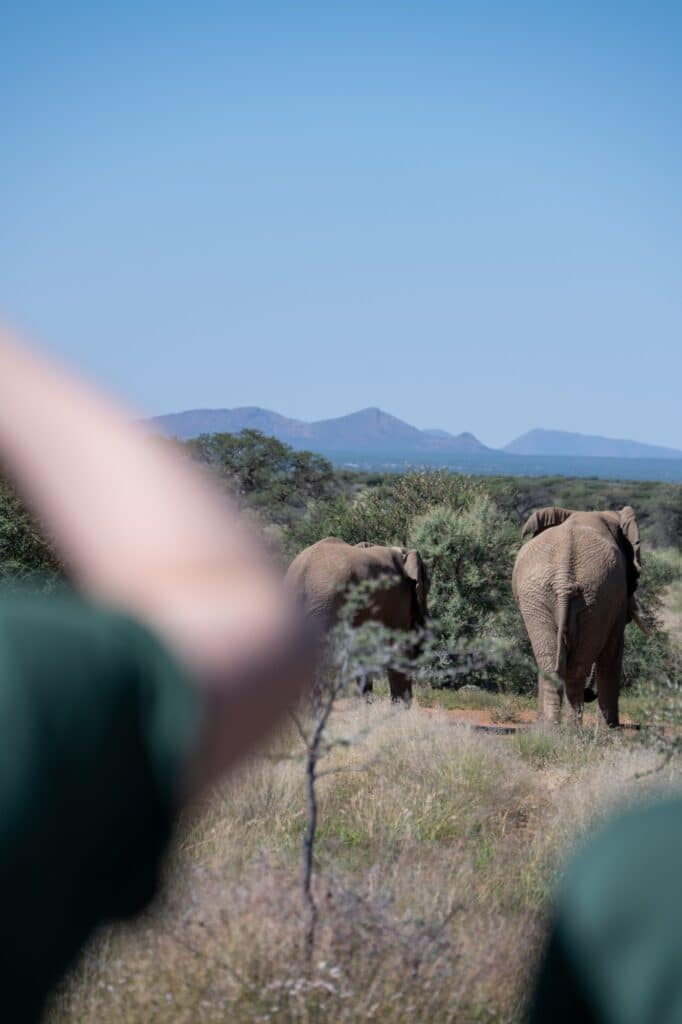
And, of course, the work itself. I’ve never before walked dozens of baboons during their midday stroll, joined rangers on nighttime rhino patrols, taken three orphaned cheetahs for a walk, searched for elephants with an enthusiastic ranger, ridden through giraffes, impalas, kudus, and zebras on horseback, or prepared meals for all kinds of wild animals.
The likelihood of doing all this again is small, this opportunities are rare, but it was truly a one-of-a-kind experience. I’m so grateful to have contributed, even in a small way, to the incredible projects at Na’an Ku Sé!
And no, you don’t need to be 18 or in your twenties on a gap year to volunteer. There were people of all ages at the project. The youngest volunteer was 18, and the oldest was 75.


FAQ – Volunteering in Namibia
Yes. Namibia is one of Africa’s leading destinations for conservation volunteering. Projects often focus on wildlife rescue, research, and habitat protection. The country is safe, organized, and offers well-structured programmes for international volunteers.
Most opportunities involve wildlife conservation, such as caring for injured animals, monitoring wildlife, assisting with feeding routines, helping with research tasks, or supporting habitat restoration. Some programmes also include community projects, like education or rural development.
No. Most volunteer programmes welcome beginners. You’ll receive training on arrival and work alongside experienced staff and conservationists.
Stays usually range from 1 to 12 weeks. Many travellers choose 1–2 weeks as part of a longer Namibia trip.
Yes. Reputable wildlife and conservation projects maintain strict safety procedures and provide full orientation. As long as you follow staff guidelines, the work is safe and well-supervised.
Most programmes charge a weekly fee that covers accommodation, meals, training, and project support. Prices often range from €700–€1,200 per week, depending on the organisation and location.
Most programmes require participants to be 18+, though some accept 16–17-year-olds with parental consent.

Related Articles:

