admin
“Where are you going? Oman? Where is that?”
That was by far the most common reaction when I told people I was heading to Oman and preparing a 7 day itinerary. Destinations like Dubai or Abu Dhabi have become familiar to many, but Oman… it is still often seen as a kind of empty desert, ruled by trading Bedouins.
Nothing could be further from the truth. The Sultanate of Oman is a prosperous country located in the southeast of Saudi Arabia. Thanks to its peaceful position on the eastern side of the Arabian Peninsula, it is an ideal holiday destination. Oman’s natural diversity is another major asset: rugged mountains, lush wadis, vast deserts, and offshore islands where you can snorkel and dive.
Oman: which documents do you need?
A passport that is valid for at least six months is sufficient if you stay in Oman for fewer than 14 days. For longer stays, you will need to apply for an e-visa in advance. The e-visa can be obtained online and costs around €40. (Insert link to the official e-visa website here)
Most nationalities, including travelers from the EU, the UK, the US, Canada, and Australia, can apply for an e-visa. Upon arrival at the airport, your passport and e-visa will be checked at immigration. Make sure to have a printed or digital copy of your e-visa, as it may be requested at any point during your trip.
Oman: how to get there
There are many airlines offering flights from Brussels or Amsterdam. Tickets to Oman aren’t very expensive. You can find tickets for as little as €150 if you don’t mind the poor service of Pegasus (flight with a stop in Istanbul). We flew from Brussels to Muscat via Doha with Qatar Airways for €420. With Qatar Airways, checked baggage is included in the price. Ticketprices of Etihad (with a stop in Abu Dhabi) are similar, but only carry on luggage is included. Unfortunately, there are no direct flights from Brussels, so you will always need to make at least one stop along the way. From Amsterdam, however, you can fly directly to Oman with Oman Air. This non-stop flight takes around seven hours. Ticket prices on this route are slightly higher, with fares starting at around €500.
So if you’re planning a trip to Oman in the coming year, definitely keep an eye on Skyscanner for the best flight deals! If you find a good deal, make sure to click through to the airline’s official website via Skyscanner. That way, you’ll get the best service in case your flight gets canceled, for example.


Stay connected
The easiest and most affordable way to stay connected in Oman is by using an eSIM. Simply put, you download an extra virtual SIM card. This allows you to keep your own phone number without the hassle of physically swapping SIM cards. Several providers offer eSIMs; for my trip to Oman, I purchased one from Holafly.
In Oman, you literally have coverage everywhere. I expected this in the cities, but even in the desert, the mountains, and on the Daymaniyat Islands, I had perfect reception! You can easily use your smartphone for GPS, stay in touch with accommodations, or adjust plans if your itinerary changes.
Oman: how to get around
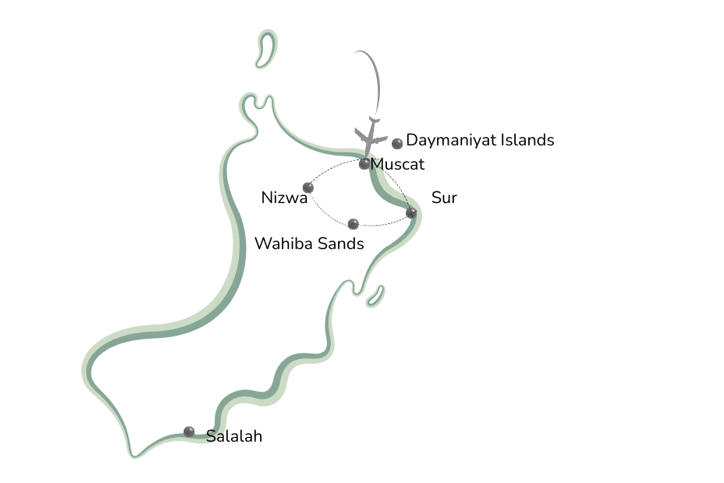
Muscat, the capital of Oman, is a popular stop for cruise ships. If you travel this way, you unfortunately only get to see one small part of the country. Some travelers choose to stay in Muscat and make day trips from there. The distances to the main highlights are not very large, so this is certainly possible. However, the easiest and most flexible way to explore Oman is by renting your own car and planning a road trip.
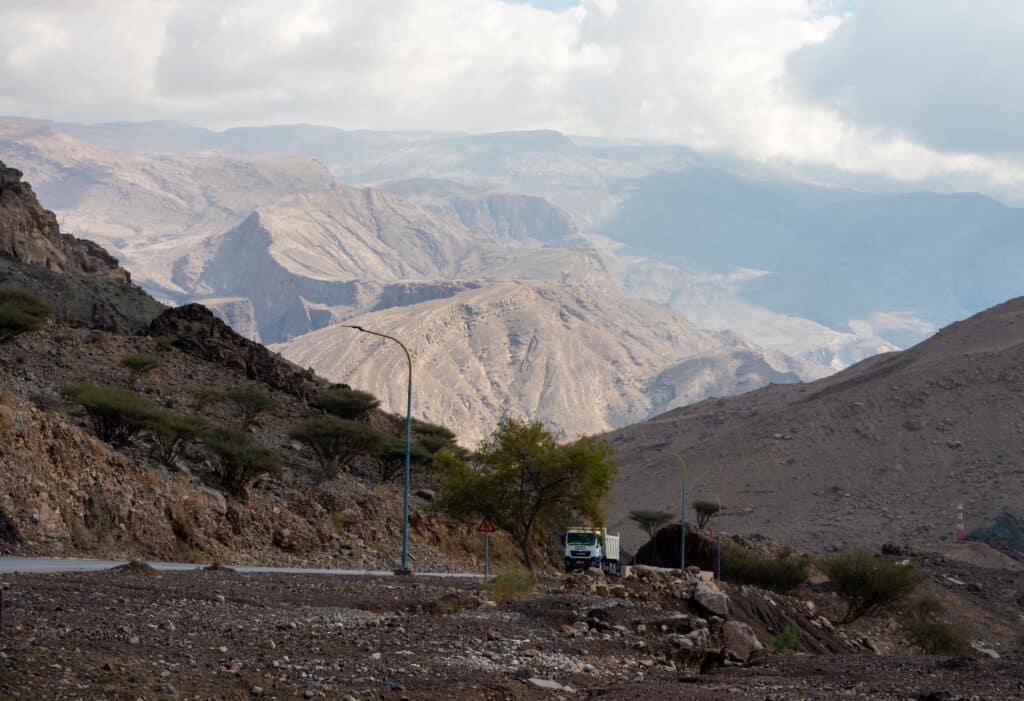
It is possible to rent a 4×4 with a rooftop tent, and unless stated otherwise, wild camping is allowed in Oman. There are plenty of places with breathtaking views, and you don’t have to compete for a spot. Traveling around Oman with a regular car and staying in small hotels is also perfectly doable. The roads are in very good condition.
One thing to keep in mind: I have never seen as many speed cameras as in Oman, so make sure to stick to the speed limits! Another striking feature is the street lighting. Belgium may not be as unique in this as I once thought, even in remote mountain areas and on roads crossing the desert, you can safely drive around after sunset.
You can find more tips on renting a car in Oman here!
Oman Travel Itinerary
Muscat
The capital
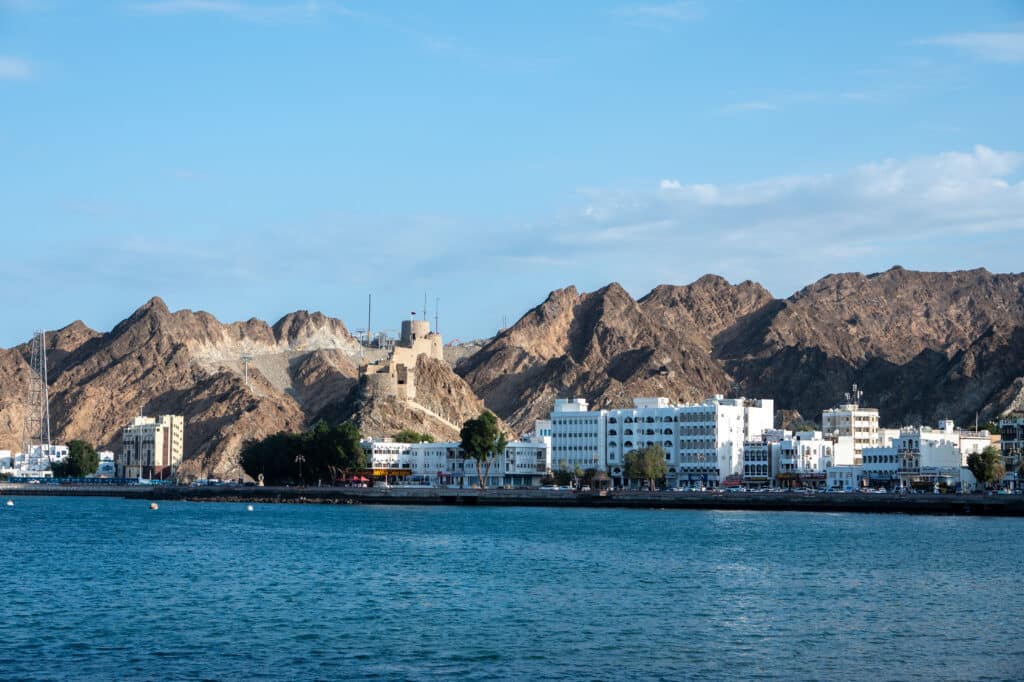
Muscat is a capital city that doesn’t try to impress with skyscrapers or flashy attractions and that is exactly its charm. With around 1.7 million inhabitants in the wider metropolitan area, the city stretches along the coast rather than rising upwards. Surrounded by rugged mountains and the sea, Muscat feels open, calm, and surprisingly spacious.
Its history is closely tied to the sea. Thanks to its strategic position along ancient trade routes, Muscat has long been a link between Arabia, Africa, and Asia. This maritime past is still visible today, in its forts, old harbor, and traditional souqs. Tourism in Muscat is low-key and respectful, focusing on culture, architecture, and everyday life rather than mass tourism. For most travelers, Muscat is the first introduction to Oman. And this introduction is a gentle one, setting the tone for a country that values authenticity, hospitality, and space.
An interesting city to visit and start your Oman itinerary
Muscat is a city of contrasts, spread out along the coast and divided into distinct areas rather than one single center. The vastness of Muscat becomes immediately clear as we drive from the airport to our hotel, and later on towards the old city. Most hotels are located in the newer parts of the city. However, this area is also very spread out, so be sure to carefully check the location of the hotel you plan to book. Choosing wisely can easily save you a few hours of driving time!
The old city, around Mutrah and Old Muscat, is rich in history and atmosphere, with traditional souqs, forts, the old harbor, and the palace of the Sultan of Oman. This part of the city reflects Oman’s cultural and maritime past.
The newer parts of Muscat are more modern and spacious, with wide roads, shopping malls, cafés, and residential areas. But also highlights like The Sultan Qaboos Grand Mosque and the new Opera are located here. Here, daily life unfolds at a slower pace than in many other capitals, blending modern comfort with Omani traditions.
Sur
The road from Muscat to Sur
On the road from Muscat to Sur, you’ll come across two interesting stops. The first one is the Bimmah Sinkhole. Personally, I found it a bit disappointing. You can descend into the sinkhole via a staircase, and swimming is at your own risk. But it doesn’t look that appealing. There are picnic areas on site, as well as toilets, and plenty of parking space. It’s a nice place for a midday stop, but not much more than that.
The coastal road itself, however, makes this route well worth it. Rugged cliffs, and from time to time a truly paradisaical beach. Camping is allowed along this coastline.
Wadi Shab
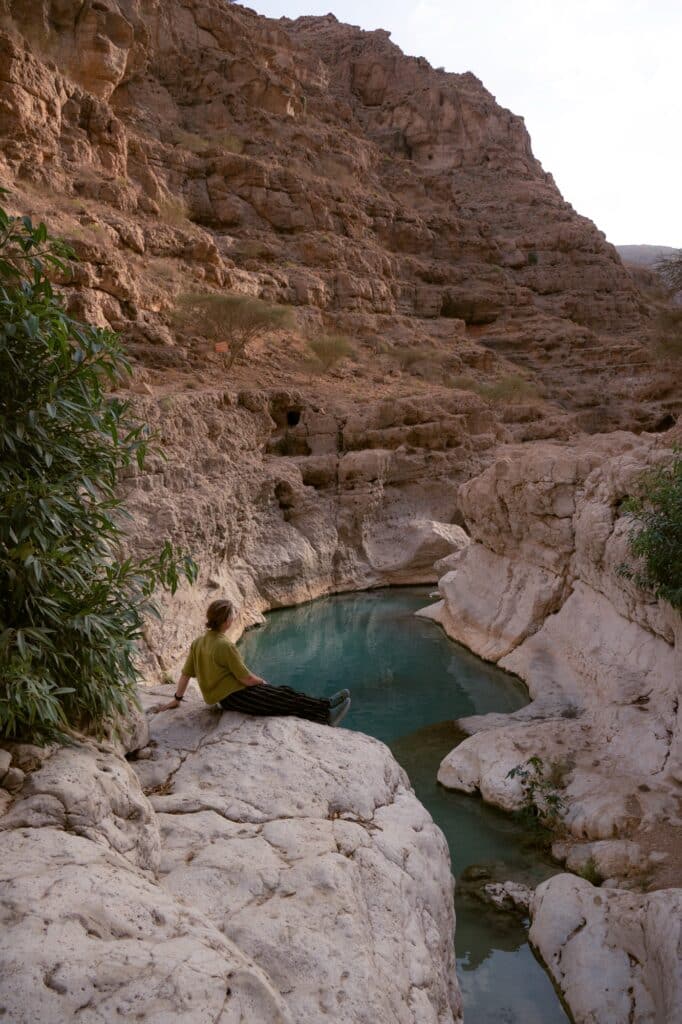
The second stop is a true gem: Wadi Shab. This place perfectly captures what Oman is all about: mountains, canyons, turquoise water inviting you to take a dip, an ingenious irrigation system, and something interesting to discover around every bend. You start the hike in Wadi Shab at the bridge near the river mouth. Here you have a choice: either take a small boat for 1 OMR, or walk a bit further and cross the river on foot, just like the locals do.
The walk to the back of the canyon takes about 45 minutes. Make sure to take your time and enjoy the surroundings, it’s absolutely stunning! At the spot where most people cool off in the river, continue walking a little further until you reach a more secluded area where you can enter the water. You’ll swim the final part of the route.
The trail ends in a pool with a small waterfall. Be aware that you’ll need to swim through very narrow openings in the rocks to reach it. Never go in here in rainy weather: wadis are prone to flash floods!

Wahiba Sands
Wadi Bani Khalid
A large part of Oman is covered by desert. Even if you’re only following a route through the northern part of the country, you have the opportunity to spend a night in the desert. It’s an experience you really shouldn’t miss! Wahiba Sands, also known as Sharqiya Sands, lies along the route between Sur and Nizwa. But before heading to the desert, there’s another beautiful place worth stopping at: Wadi Bani Khalid.
Unlike the dry, sandy landscapes you might expect in this part of Oman, Wadi Bani Khalid is known for its natural pools of clear turquoise water, surrounded by rocky mountains and palm trees. You can walk along the wadi, relax by the water or take a refreshing swim. It’s a lovely contrast to the desert experience that awaits you in Wahiba Sands, making it a perfect addition to your Oman road trip. Wadi Bani Khalid is a popular tourist spot, not really a hike, more a walk over a paved path. But it’s a nice spot for swimming and let the little fish nibble at your feet.
Bidiyah: the gateway to the Wahiba Sands
Bidiyah is a small town in eastern Oman and one of the main gateways to the Wahiba Sands, also known as the Sharqiya Sands. It is the place where the landscape starts to change, with the first golden dunes appearing on the horizon. Many travellers stop here before heading into the desert, either with their own 4×4 or as part of an organised tour. Bidiyah is also a convenient place to arrange a desert experience, from dune driving and camel rides to spending the night in a traditional desert camp. Even if you are not planning to stay overnight, it is worth taking some time to explore the area and see the impressive dunes that make this part of Oman so special.
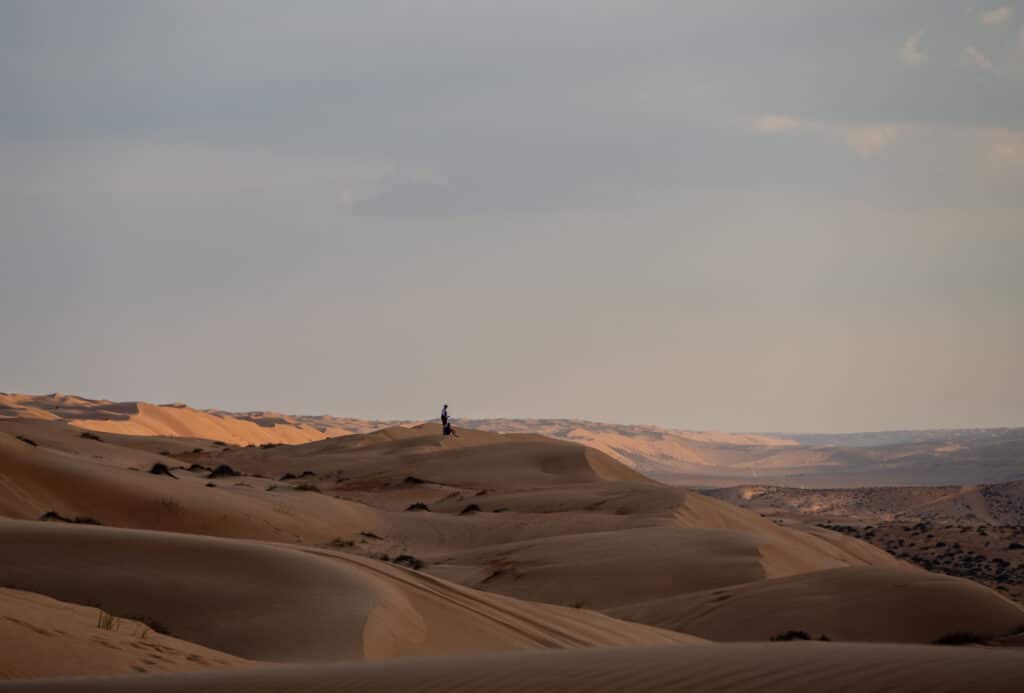
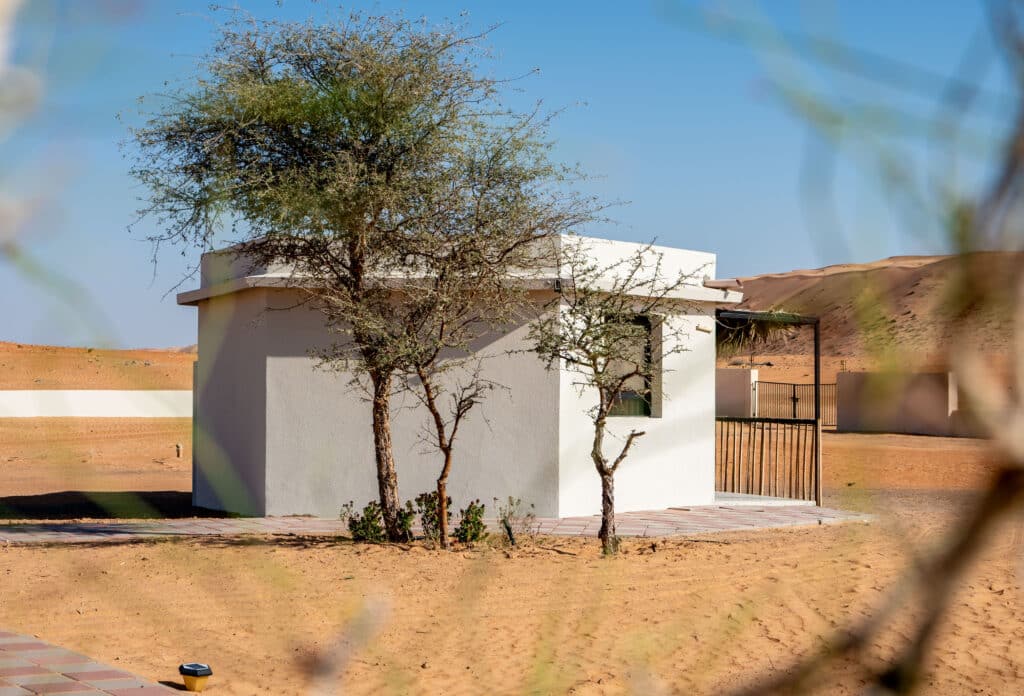
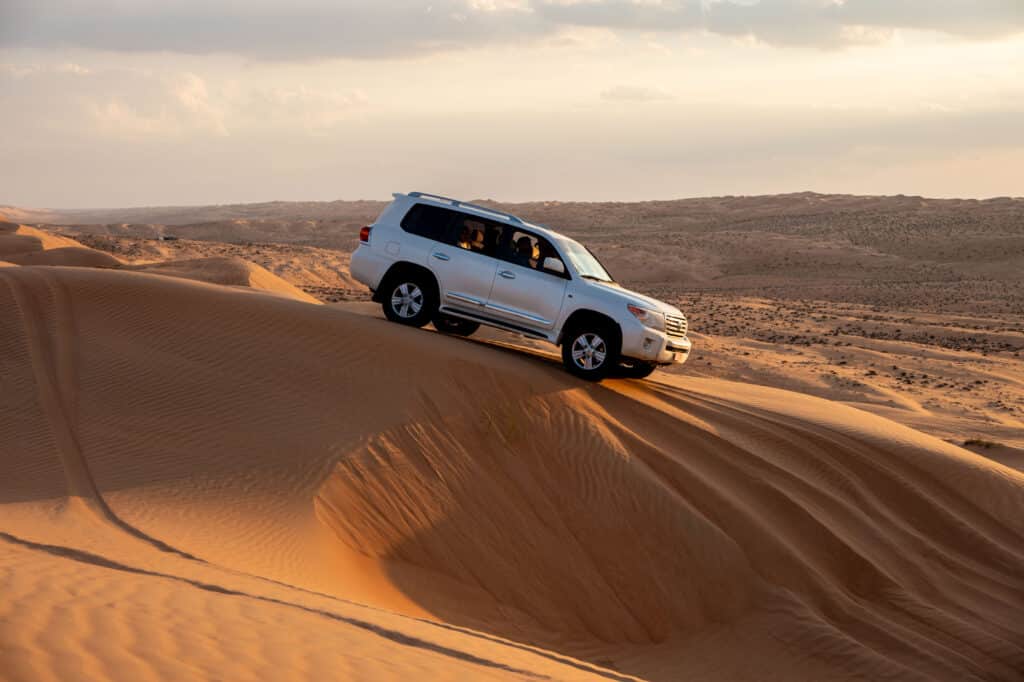
Tip: take a hotel far into the desert. You’ll have your desert ride for free!
Nizwa
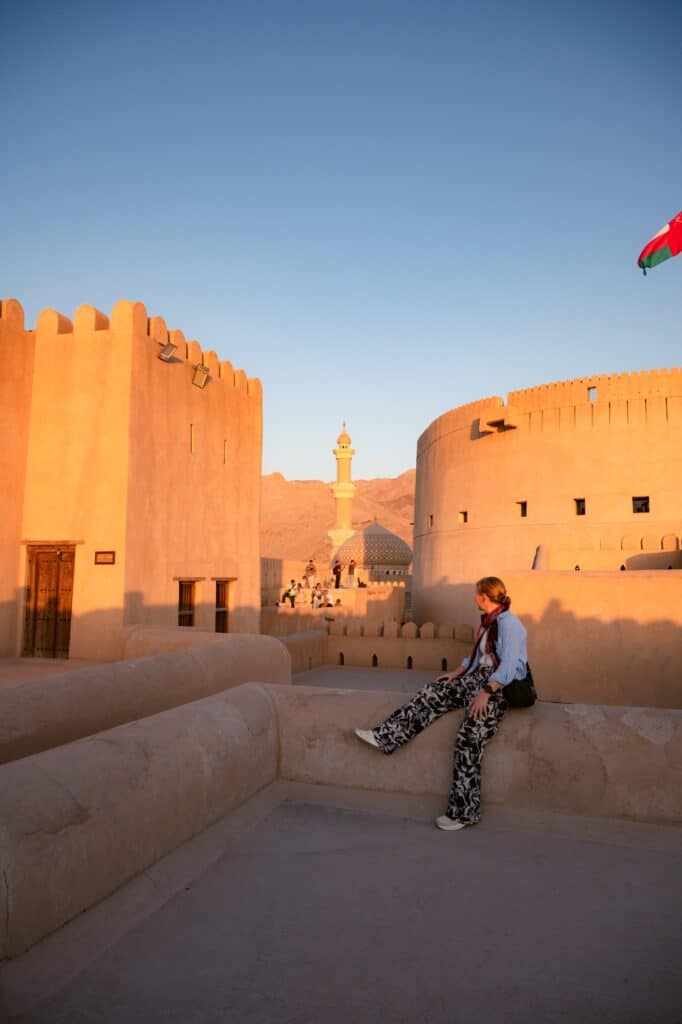
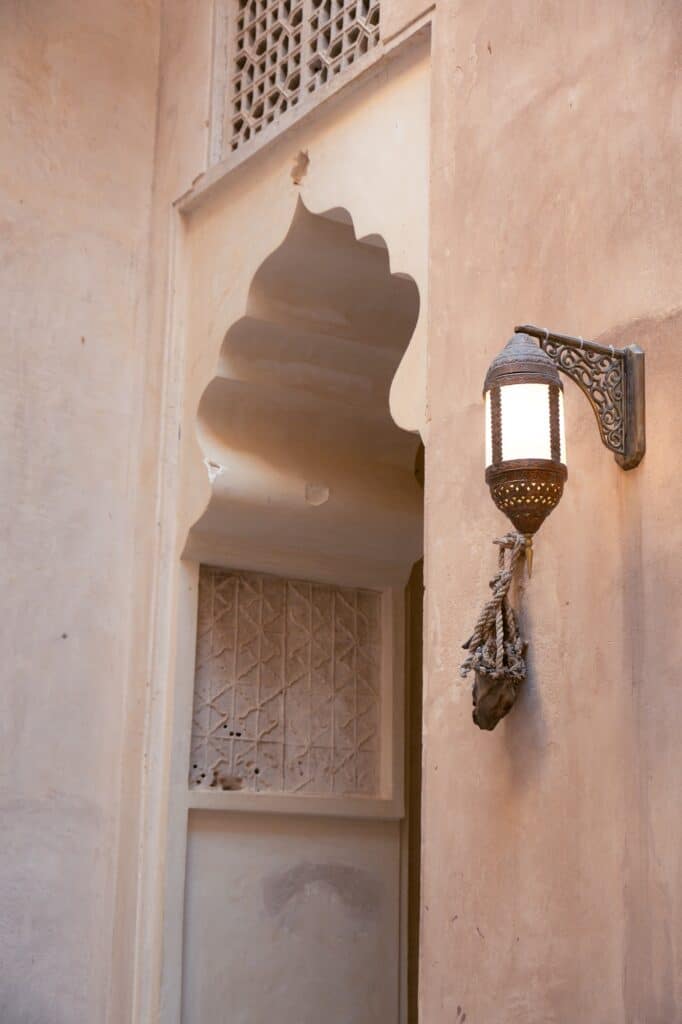
Nizwa is a great stop on any road trip through northern Oman.The old town has a unique vibe that I love very much. This was once the country’s capital. It is now best known for its impressive historic fort, traditional souq and lively Friday livestock market. It also makes an excellent base for exploring the surrounding region, with highlights such as Bahla Fort, Jabrin Castle, the picturesque village of Misfat Al Abriyeen and the spectacular mountains of Jebel Akhdar and Jebel Shams. Do you love to make photos? Nizwa is the place to be!
💡 Travel Tips & Useful Links
- Find the best deals for flights: Skyscanner
- Compare and book accommodations worldwide: Booking.com
- Find the cheapest rental cars: Rentalcars.com
- Book experiences and attractions easily: GetYourGuide
This blog post contains affiliate links. If you book something through one of these links, it won’t cost you anything extra, but I may earn a small commission. This helps me keep the blog running, thank you for your support!
All photographs on this website are copyrighted and may not be copied, reproduced, distributed or used without prior written permission. If you would like to use or purchase any of my photographs, selected images are available through my stock photography portfolios: Portfolio Shutterstock, Portfolio Adobe Stock

These articles might interest you too:
FAQ – Oman itinerary
Most nationalities can obtain an e-visa online before arrival. Short stays under 14 days may only require a passport valid for at least six months. Longer stays require the e-visa, which costs around €40.
The easiest and most flexible way to explore Oman is by renting a car, ideally a 4×4 if you plan to visit the desert or mountains. Roads are generally in good condition, and even regular cars are sufficient for most tourist routes.
Yes, Oman is considered very safe. The country is known for its hospitality and low crime rates. Always follow local customs and respect rules regarding dress and behavior.
The best time is October to April, when the weather is cooler and more comfortable for outdoor activities like hiking, desert tours, and sightseeing.
The official language is Arabic, but English is widely understood in hotels, restaurants, and tourist areas. Tip: learn a few Arabic words, and you’re even more welcome!
Yes. The easiest option is an eSIM, which keeps your number and provides reliable coverage across cities, deserts, mountains, and even islands like the Daymaniyat Islands.
The currency is the Omani Rial (OMR). Credit cards are widely accepted in hotels, restaurants, and larger stores, but it’s useful to carry some cash for markets and smaller purchases.