
 admin
Takayama, a charming place in the Japanese Alps
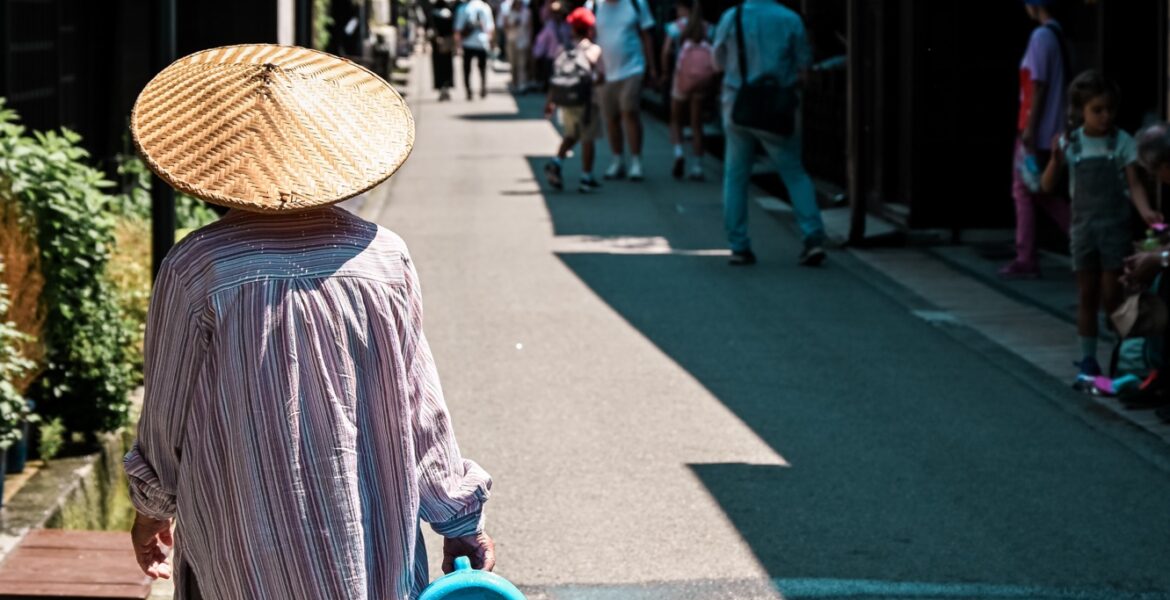
Takayama is a charming mountain town in the Japanese Alps, and it’s easy to explore on foot. Don’t expect a long list of blockbuster attractions. Instead, you get cozy streets, traditional wooden houses and an authentic Japanese atmosphere, without the crowds of Tokyo or Kyoto. It’s the perfect place to slow down for a day or two.
In this guide we share how we got there (including a handy direct bus from Kawaguchiko), where we stayed, what’s worth your time in Takayama and what you can skip, plus practical tips on opening hours, entrance fees and renting a car. Takayama was a surprisingly beautiful stop on our 3 weeks Japan itinerary.
How to get from Kawaguchiko to Takayama
Bus or Train
Most travelers take the train from Tokyo to Takayama. We originally planned to backtrack from Kawaguchiko to Tokyo and continue by train from there. But by chance, we discovered a much more convenient option: the bus company Limon runs a direct bus between Kawaguchiko and Takayama, part of their “Golden Route”. It’s faster than going back to Tokyo first, and significantly cheaper.
Tickets can only be booked online via the official Limon website. We booked just one day in advance and had no trouble finding available seats. During peak travel season, however, it’s highly recommended to book early to secure your spot.
The bus drops you off at the Limon stop at Takayama Station. If you’re coming from elsewhere, here’s how the main options compare:
| From | How | Approx. travel time |
|---|---|---|
| Kawaguchiko | Direct Limon bus (Golden Route) | See the Limon website for the current timetable |
| Kawaguchiko | Public transport via Hachioji, with transfers | 5+ hours |
| Tokyo | Shinkansen to Nagoya, then JR Hida limited express | approx. 4.5 hours |
| Tokyo (Shinjuku) | Highway bus | approx. 5.5 hours |
| Nagoya | JR Hida limited express | approx. 2 to 2.5 hours |
From Takayama station it was a 10 minutes walk to our hotel, Wat Hotel & Spa. More on this below.
Rental car
Another popular way to travel through this region is by renting a car. The roads in Japan are in excellent condition, which makes driving smooth. Keep in mind that people drive on the left side of the road, something European drivers may need a little time to adjust to. Driving through the Japanese Alps means navigating narrow, winding mountain roads, but the reward is breathtaking views and the freedom to stop wherever you like. Rental cars are surprisingly affordable, and comparing prices is quick and easy through platforms like Rentalcars.com.
Check your driving license before you go. What you need depends on the country that issued your license:
- Belgian license: an International Driving Permit issued in Belgium is not accepted in Japan. Instead, you drive with your Belgian license plus an official Japanese translation of it. You can request that translation online from the Japan Automobile Federation (JAF) before your trip, and processing takes about 2 to 3 business days. Carry the translation, your original license and your passport. It’s valid for up to one year from the day you enter Japan.
- Most other countries: you need an International Driving Permit issued under the 1949 Geneva Convention, together with your own license. A permit issued under the 1968 Vienna Convention is not valid in Japan.
You can’t arrange any of this once you’ve arrived, so take care of it well before your trip, and always confirm the current rules with JAF or the Japanese embassy.

Where to stay in Takayama
We stayed at Wat Hotel & Spa, a 10 minute walk from Takayama Station. It was a perfect spot: you have an onsen to relax in after a day of walking, and at night there are free ice creams and marshmallows. Staying near the station keeps everything within walking distance, including the old town and the morning markets.
Highlights of Takayama
Takayama is a smaller, less touristy city, perfect for wandering through the old town and soaking up the atmosphere at a relaxed pace.
Old Town (Sanmachi Suji)
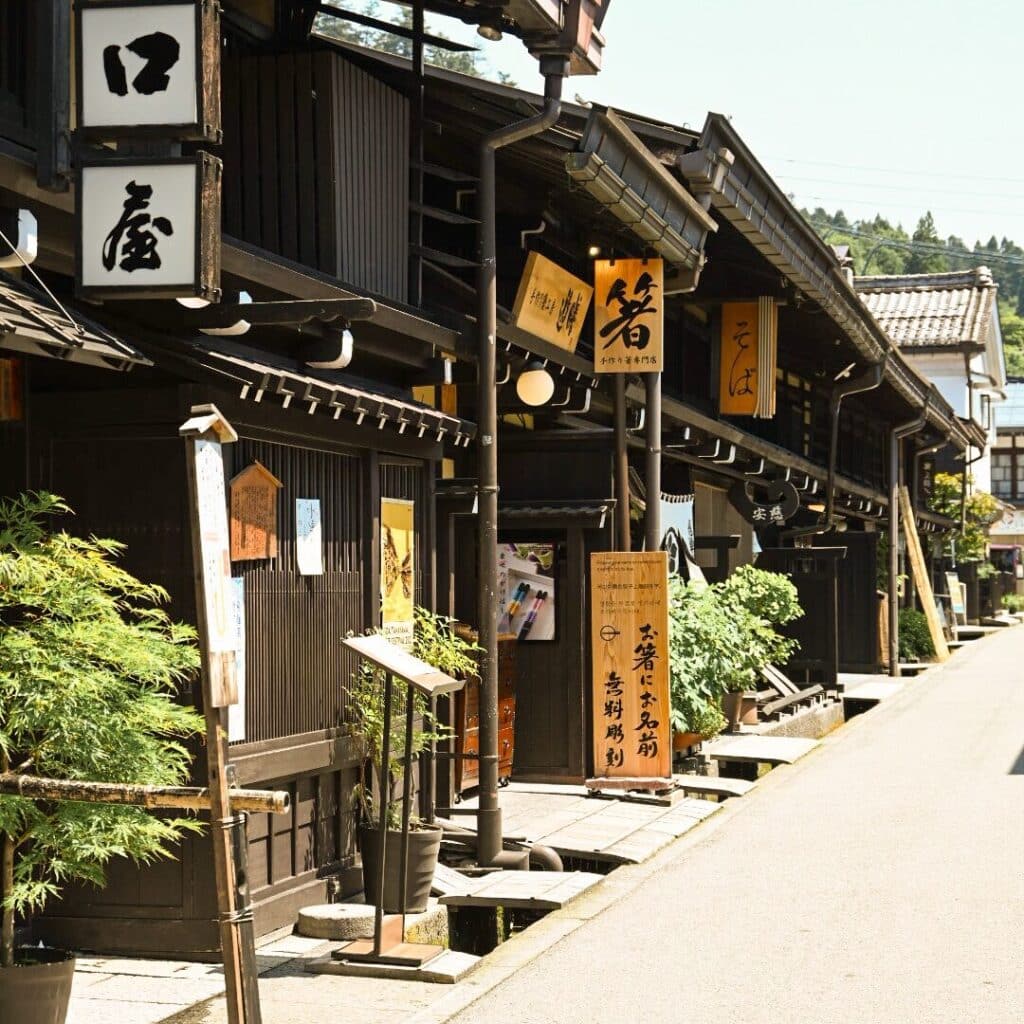
In the heart of Takayama, the Sanmachi Suji Historic District, also known as Takayama Old Town, is a beautifully preserved slice of old Japan. The area thrived during the Edo Period (1603-1868) as a hub for merchants and artisans, and it still has its historic character today. Walking the streets is free.
- Timeless streetscape: three main streets, Kamiichino-machi, Kaminino-machi and Kamisanno-machi, are lined with traditional wooden merchant houses (machiya) with dark lattice facades and low roofs. They once belonged to merchants trading timber, sake and crafts.
- Local brews and tastes: look for sugidama (cedar branch balls) hanging above the sake breweries, a local tradition. Some breweries offer tastings, and the street food is vibrant. Try specialties like Hida beef sushi and mitarashi dango.
- Arts and crafts: shops sell Sarubobo charms (traditional “baby monkey” dolls), handmade wooden chopsticks (yes, we bought our chopstick souvenirs here!) and beautiful woodblock prints.
- Retro museum: a small but hilarious museum!
Tip: the main street gets noticeably busier around midday, when day-trippers arrive by bus. Go early in the morning or late in the afternoon for a more relaxed stroll.
Takayama Jinya and heritage houses
Takayama Jinya, a former Edo-era government office, sits just beyond Sanmachi Suji. For a modest entry fee (about ¥440), it offers insight into the history of local administration. It’s open from 8:45 a.m. to 5 p.m. from April to October and until 4:30 p.m. from November to March. Also nearby are heritage homes and museums like the Yoshijima Heritage House and the Kusakabe Folk Crafts Museum.
Hida no sato
Hida no Sato is an open-air museum just outside Takayama, showcasing traditional houses from the region, including the famous gassho-zukuri farmhouses with their steep thatched roofs. The village gives a glimpse into rural life in the Japanese Alps. You can stroll through old workshops, watch craft demonstrations and enjoy beautiful views of the surrounding mountains.
It’s open daily from 8:30 a.m. to 5 p.m., and admission is ¥700 for adults (¥200 for children). It’s easy to reach with a 10 minute bus ride from JR Takayama Station. We walked, and it only took 30 minutes. Plan on roughly one to two hours for your visit.
Morning Market
Takayama is famous for its Asaichi, or morning markets, held daily until noon. The two main markets are the Miyagawa Market along the river (from 7 a.m., or 8 a.m. from December to March) and the Jinya-mae Market in front of Takayama Jinya (from 6 a.m., or 7 a.m. from January to March). Both are about a 10 minute walk from the station.
You’ll find fresh produce, local snacks, handmade crafts and souvenirs. Arrive early for the best atmosphere and the freshest products. Don’t expect this to be spectacular, and avoid being disappointed like we were!
Shiroyama
Shiroyama Park is located on a hill right next to the city center, just a short walk from the old town. A scenic path of about 3 kilometers circles the hill, which makes it a peaceful place for a stroll.
If you walk to the top, you’ll find the ruins of Takayama Castle. The ruins themselves aren’t particularly impressive, but the view from the top certainly is. On the hill you’ll also come across Shoren-ji Temple and Shiroyama Gobo, though they aren’t worth a special detour.
How long to stay in Takayama
Most visitors spend one full day exploring the historic district, including the morning market, the old town streets, Takayama Jinya and a sake brewery or two. Add a few hours if you also want to visit Hida no Sato and walk up Shiroyama.
Frequently asked questions
Yes, the Limon bus (part of their Golden Route) runs directly between the two. Book online via the official Limon website, and book early in peak season.
Not with a Belgian International Driving Permit. You need your Belgian license together with an official Japanese translation, which you can request online from JAF before you travel.
If you enjoy atmospheric streets, local food and crafts and a slower pace, yes. Don’t expect big blockbuster attractions. It’s the atmosphere that makes Takayama special.
Early in the morning or late in the afternoon. Around midday it gets busier with day-trip groups.
💡 Travel Tips & Useful Links
- Find the best deals for flights: Skyscanner
- Compare and book accommodations worldwide: Booking.com
- Find the cheapest rental cars: Rentalcars.com
- Book experiences and attractions easily: GetYourGuide
This blog post contains affiliate links. If you book something through one of these links, it won’t cost you anything extra, but I may earn a small commission. This helps me keep the blog running, thank you for your support!
All photographs on this website are copyrighted and may not be copied, reproduced, distributed or used without prior written permission. If you would like to use or purchase any of my photographs, selected images are available through my stock photography portfolios: Portfolio Shutterstock, Portfolio Adobe Stock


